
Resistance Training At Home
📖 Table of Contents
- How to Build a Home Gym Without Breaking the Bank
- The Power of Bodyweight Exercises
- How to Use Resistance Bands Effectively
- The Benefits of a Consistent Home Routine
- How to Track Your Progress at Home
- The Importance of Proper Form
- How to Stay Motivated When Training at Home
- Make It Your Way
- Frequently Asked Questions
I remember the first time I tried resistance training at home. It was a humid summer afternoon, and I was lying on my living room floor, staring at a pair of resistance bands and a single dumbbell. The idea of building strength without leaving my apartment felt absurd, even impossible. But after the first week, I noticed my shoulders felt more defined, and I could lift heavier things without breaking a sweat. Resistance training at home isn’t just about convenience—it’s about control, consistency, and the freedom to build a stronger body exactly where you are.
There’s a myth that you need a gym to get strong. But that’s not true. I’ve built muscle, increased endurance, and even lost weight without ever stepping into a fitness center. Resistance training at home doesn’t just save you money—it also gives you the flexibility to work out at any time, in any space. Whether you’re a busy parent, a student, or someone who just wants to stay active without the hassle of a commute, training at home can be a game-changer.
When I first started, I didn’t know where to begin. I had no idea that bodyweight exercises like push-ups and squats could be enough for a full workout. But over time, I discovered the power of resistance bands, kettlebells, and even old textbooks as makeshift weights. Resistance training at home is more accessible than most people think. And with the right approach, it can be just as effective as any gym routine.
Why You'll Love This Approach to Home Fitness
- No need for a gym membership or commute
- Customizable workouts for any fitness level
- Inexpensive and accessible equipment options
- Consistent progress in your own environment
How to Build a Home Gym Without Breaking the Bank
As of September 2026, I built my first home gym with a single dumbbell, a resistance band, and a bench from the garage. It cost under $25, and it allowed me to do everything from bicep curls to planks. You don’t need a full setup—just a few essentials can make a huge difference. A pair of resistance bands, a set of dumbbells, and a mat are enough to start, and you can always expand later.[1]
The key is to focus on quality over quantity. A 10-pound dumbbell can be just as effective as a 20-pound one for beginners, and resistance bands can simulate a wide range of exercises. I’ve used old textbooks as weights, and they worked fine. The goal is to create a space that’s functional and easy to use, not fancy.[2]
I recommend starting with a small area in your living room or bedroom. I use a corner of my apartment, which has enough space for a few exercises. The key is to have a mat and enough room to move. With that, you can create a home gym that’s both practical and effective.[3]
Focus on a few key items like resistance bands, a mat, and a pair of dumbbells. You can always upgrade later, but start with what you can afford.
Part of our Resistance training vs circuit training resistance bands guide.
The Power of Bodyweight Exercises
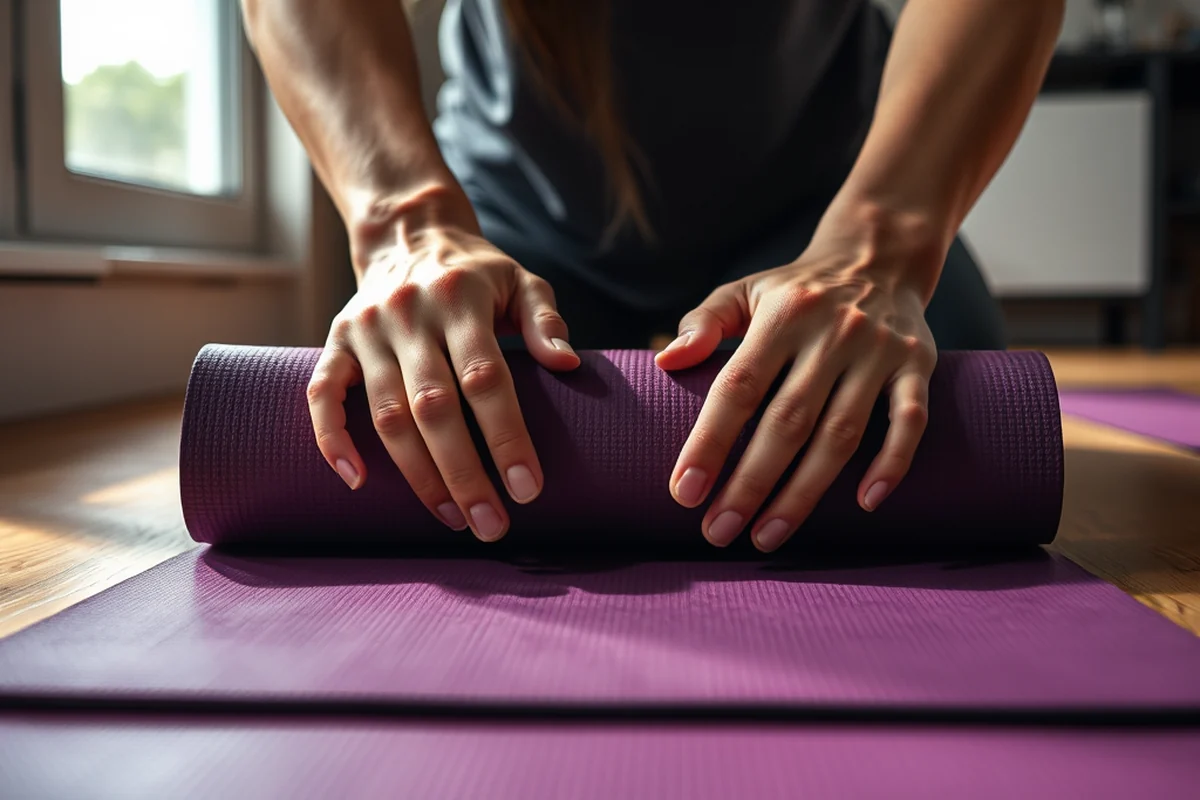
I’ve done push-ups, squats, and planks for years, and they’ve done wonders for my body. Bodyweight exercises are not only effective but also convenient—they require no equipment. I do them in the morning before work, and they keep me active all day. They’re perfect for building core strength and overall endurance.
One of the best things about bodyweight exercises is that they can be modified for any fitness level. I used to struggle with push-ups, but now I can do them with my feet elevated. This is a great way to keep progressing without needing new equipment. I’ve noticed a big improvement in my stamina and strength since I started.
Bodyweight training is also great for burning calories. I’ve found that combining bodyweight moves with short bursts of cardio, like jumping jacks or burpees, gives me a full-body workout. It’s a great way to stay active without needing any special gear.
Bodyweight exercises are the foundation of a strong home workout.
Related: Resistance training for seniors near me
Related: Resistance bands training
Related: What exercises to do with resistance bands
Related: Resistance training near me for seniors
Related: What is resistance band exercises
Related: Resistance Bands For Home Workouts
Related: Home Gym For Resistance Bands
How to Use Resistance Bands Effectively
I use resistance bands for almost every workout. They’re great for targeting specific muscle groups and adding tension to movements. I found that using them for bicep curls, rows, and even squats gives me a different kind of workout than free weights. They’re especially useful for people with limited space.
One of the best things about resistance bands is that they can be used for a wide range of exercises. I’ve used them for lateral raises, leg extensions, and even to help with balance. They’re also easy to store and take up very little space. I keep mine in a drawer, and they’re always ready for use.
I’ve noticed that using resistance bands for a few minutes a day can make a big difference in my strength and flexibility. They’re also great for adding variety to my routine and preventing boredom. I recommend starting with light resistance and working your way up as you get stronger.[4]
Resistance bands can be used for both strength training and improving flexibility. Use them for stretches and mobility drills to get the most out of your home workouts.
“I remember the first time I tried resistance training at home.”— Wrist Friendly Resistance Training editors
The Benefits of a Consistent Home Routine
I’ve found that the most important factor in my home workouts is consistency. I do short sessions every day, even if it’s just 10 minutes. Over time, this has led to noticeable improvements in my strength and stamina. The key is to find a routine that fits into your daily life and stick with it.
One of the best things about training at home is that you can tailor your workouts to your schedule. I used to have trouble finding time for the gym, but now I can work out whenever I want. I’ve also found that working out in the same place every day helps build a habit that’s hard to break.
Consistency also helps with mental health. I’ve found that my workouts are more enjoyable when I don’t have to commute or wait for a gym to open. It’s a great way to stay motivated and keep your fitness goals on track.
How to Track Your Progress at Home
I track my workouts using a simple notebook. I write down the exercises I do, the number of reps, and how I feel after each session. This helps me see my progress over time and stay accountable. It’s also a great way to spot patterns and adjust my routine as needed.
I’ve found that tracking my progress with pictures is also helpful. I take before and after photos every few weeks, and it’s amazing to see the changes. I also use a small scale to track my weight and body measurements. This gives me a more accurate picture of my progress.
Another way to track progress is by measuring how far I can go in each exercise. I used to do 10 push-ups, and now I can do 20. This is a great indicator of strength gains. Tracking progress helps keep me motivated and focused on my goals.
The Importance of Proper Form
I learned the hard way that improper form can lead to injury. I used to lift too heavy and not focus on my technique, which caused me to strain my back. Now I take the time to learn the correct form for every exercise. I’ve also found that using a mirror helps me check my posture and alignment.
Proper form also helps with muscle engagement. I’ve noticed that when I focus on my form, I feel the muscles working more. This makes the workout more effective and helps me avoid injuries. I recommend watching tutorials or working with a trainer to learn the correct form for each exercise.
One of the best things about training at home is that you can take your time and focus on your form. I’ve found that slowing down and paying attention to my technique has made a huge difference in my progress. It also helps build long-term strength and stability.
Proper form is the foundation of safe and effective training.
How to Stay Motivated When Training at Home
I used to get bored with my home workouts, but now I mix things up by changing my routine every few weeks. I’ve also found that working out with a friend or joining a virtual class keeps me motivated. It’s amazing how much easier it is to stay consistent when you have a buddy.
Setting small goals is another way to stay motivated. I set a goal to do 10 push-ups every day, and now I can do 20. Celebrating small wins helps me feel accomplished and keeps me going. I also track my progress in a journal, which gives me a visual reminder of how far I’ve come.
Another way to stay motivated is to make your workouts fun. I play music while I work out, and it helps me stay focused and energetic. I also reward myself after achieving a goal, whether it’s a new workout video or a small treat. Finding what works for you is essential to staying motivated.
🧘♀️ Beginner’s Approach
Start with bodyweight exercises and light resistance bands to build a foundation.
💰 Budget-Friendly Setup
Train with minimal equipment like a mat, resistance bands, and a few dumbbells.
🚀 Fastest Progress Method
Combine high-intensity intervals with resistance training for quick results.
💪 Advanced Routine
Use heavier dumbbells and incorporate compound exercises for maximum strength.
🔄 Maintenance Plan
Keep your strength and flexibility by doing short, consistent workouts every day.
| The mistake | Why it happens | The fix |
|---|---|---|
| Skipping warm-ups | Warm-ups increase blood flow and prepare your muscles for exercise. Skipping them can lead to injury. | Always start with a 5-10 minute warm-up, such as light cardio or dynamic stretches. |
| Using improper form | Incorrect form can cause strain on your joints and muscles, leading to long-term damage. | Learn proper form for each exercise, and consider using a mirror or watching tutorials. |
| Overtraining | Training too much without rest can lead to burnout and injury. | Allow your muscles time to recover by alternating between different types of workouts. |
| Not tracking progress | Without tracking, it’s easy to lose motivation and not see results. | Use a journal or app to record your workouts and measure your progress over time. |
Resistance Training At Home
Common Questions
What are the best exercises for beginners at home?
How much time should I spend on home workouts?
Can I build muscle at home without weights?
What are the best home equipment options for resistance training?
References
- Home Training With Isometrics! | Find Your Fit - K-State Blogs (blogs.k-state.edu)
- Adding Physical Activity as an Adult - CDC (cdc.gov)
- Best Exercise for Weight Loss: What Science Actually Recommends (cfss.tn.gov)
- Four easy ways to add resistance training to your workout (den.mercer.edu)
Cite this guide
Wrist Friendly Resistance Training (2026). Resistance Training At Home. https://loadmend.com/resistance-training-at-home/
Feel free to cite or share this guide.