
Resistance Bands Yoga
📖 Table of Contents
- What Exactly Is Resistance Bands Yoga?
- How Resistance Bands Enhance Yoga Poses
- The Benefits of Resistance Bands Yoga
- How to Get Started with Resistance Bands Yoga
- Tips for Maximizing Your Resistance Bands Yoga Practice
- Common Mistakes to Avoid in Resistance Bands Yoga
- How Resistance Bands Yoga Can Improve Your Daily Life
- Incorporating Resistance Bands into a Daily Yoga Routine for Consistency
- Make It Your Way
- Frequently Asked Questions
I remember the first time I tried resistance bands yoga — it was during a rainy Saturday morning, my usual gym closed, and my back was aching from weeks of slouching at my desk. I had a set of resistance bands lying around from a failed home workout attempt and thought, 'What if I tried using them for yoga?' That decision led me down a path I never expected, blending the fluidity of yoga with the intensity of resistance training. The result was not only relief for my back but also a newfound way to move my body that felt both challenging and deeply satisfying.
Resistance bands yoga is not about replacing your regular yoga practice or your traditional resistance training — it’s about merging the two. It’s the kind of workout that makes your muscles burn while your breath flows. It’s perfect for people who want to feel more grounded in their body without the need for heavy weights or expensive equipment. I've tested various bands, from thin loops to thick loops, and found that the right band can make a huge difference in the quality of your practice.
Over time, I've discovered that resistance bands yoga isn’t just a trend — it’s a powerful tool that can enhance flexibility, improve muscle tone, and even help with posture. I’ve used it to rehabilitate my own body after an injury, and it’s worked better than I ever imagined. If you're looking for a way to add intensity to your yoga practice or a way to bring yoga into your resistance training, this is the article for you.
Why You'll Love This Practice
- Adds resistance to yoga poses for a more intense workout
- Requires no equipment other than a few bands and a mat
- Can be done anywhere, even at home or while traveling
- Helps improve muscle engagement and flexibility simultaneously
What Exactly Is Resistance Bands Yoga?
As of September 2026, Resistance bands yoga is a practice that uses elastic bands to add tension during yoga poses. This creates a greater muscular engagement than traditional yoga alone, making it a great way to build strength and improve posture. I use a variety of bands, from light pink loops for beginners to heavy black ones for more advanced practitioners.
Each band can be anchored to a fixed point — like a door or the floor — or held in the hands to create resistance during poses. This allows for a range of movements, from simple stretches to complex sequences that challenge both strength and flexibility.
I've noticed that using resistance bands during yoga has helped me engage muscles I usually don’t activate in regular yoga, like the glutes and core. This has led to better posture and more balanced muscle development over time.
Light bands are great for beginners and flexibility, medium bands add resistance, and heavy bands are ideal for advanced strength training. I always start with light bands and gradually move up as I get stronger.
Part of our Resistance training vs circuit training resistance bands guide.
How Resistance Bands Enhance Yoga Poses

When you wrap a resistance band around your thighs during a standing pose like warrior II, it creates a constant pull that forces your muscles to work harder to maintain balance and alignment. This not only deepens the stretch but also builds strength in your legs and core.
I've found that using a band around my arms during poses like downward dog or upward facing dog increases the engagement in my shoulders and chest. This has helped me improve my upper body strength and posture over time.
The key is to use the band as a tool to enhance your practice, not replace it. I always make sure the band is tight enough to create resistance but not so tight that it causes discomfort or injury.
Resistance bands are like a silent partner in your yoga journey — they push you further without ever taking over.
Related: Resistance training bands
The Benefits of Resistance Bands Yoga
One of the biggest benefits I've noticed is the way resistance bands yoga improves my posture. The added tension in my back and shoulders during poses like cat-cow and mountain pose has helped me stand taller and feel more aligned.
I've also seen improvements in my flexibility. The bands help me stretch deeper into poses, which I couldn't do before without pain or injury. My hamstrings and hip flexors, in particular, have become much more flexible over time.
Another benefit is the way this practice helps me build muscle. Unlike traditional yoga, which focuses more on stretching, resistance bands yoga adds an element of strength training that I didn't expect to get from yoga alone.
Wrap a band around your waist and hold it as you do planks or side planks. This adds resistance to your core and helps you build a stronger, more defined midsection.
“I remember the first time I tried resistance bands yoga — it was during a rainy Saturday morning, my usual gym closed, and my back…”— Wrist Friendly Resistance Training editors
Related: Resistance bands training
How to Get Started with Resistance Bands Yoga
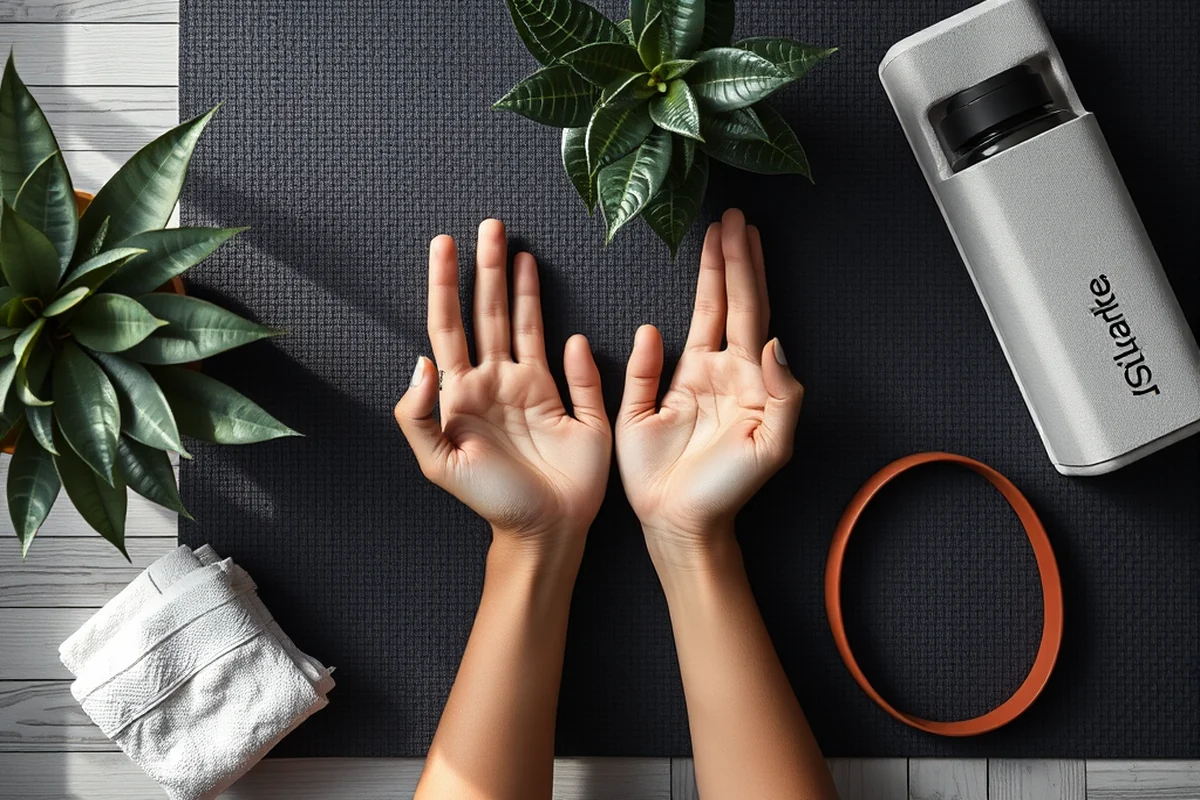
To get started, I recommend buying a set of resistance bands that includes light, medium, and heavy loops. These will allow you to progress as your strength improves. You'll also need a yoga mat to cushion your joints and provide a stable surface.[1]
Begin with basic poses like downward dog, warrior I, and mountain pose. Use the bands to add resistance to your arms and legs. I often anchor a band to the floor and loop it around my feet during standing poses to create tension.
As you get more comfortable, you can try more complex sequences like sun salutations with resistance or balance poses like tree pose with a band around your ankle. The key is to start slow and build up intensity gradually.
Related: Resistance bands how to
Tips for Maximizing Your Resistance Bands Yoga Practice
Form is essential in resistance bands yoga. If you're not aligned properly, the bands can cause strain on your joints or muscles. I always make sure my spine is straight and my shoulders are relaxed before starting any pose.
Consistency is key. I practice resistance bands yoga at least three times a week, and I've noticed significant improvements in my strength and flexibility over time. Even short 15-minute sessions have a cumulative effect.[2]
Progression is important, too. As you get stronger, you should move to heavier bands or more advanced poses. I’ve found that challenging myself with new movements keeps my practice interesting and effective.
Related: Do i need resistance bands
Common Mistakes to Avoid in Resistance Bands Yoga
One common mistake is using too much resistance. If your band is too tight, it can cause strain on your joints and muscles. I always start with a light band and increase tension as I get stronger.
Another mistake is forgetting to breathe. Holding your breath during poses can increase tension and reduce the effectiveness of the practice. I make sure to inhale and exhale deeply with each movement.
Lastly, many people forget to warm up before starting their practice. I always spend 5-10 minutes doing gentle stretches and mobility exercises before using the bands. This helps prevent injury and prepares my body for the workout.[3]
A little tension can go a long way — but too much can cause more harm than good.
Related: Diy resistance training at home
How Resistance Bands Yoga Can Improve Your Daily Life
One of the biggest changes I've noticed is in my posture. I used to slouch at my desk all day, but after practicing resistance bands yoga regularly, I've found that I sit up straighter and stand taller without even thinking about it.
The increased flexibility from resistance bands yoga has also made daily tasks easier. I can now reach higher shelves without straining my back, and I can bend down to tie my shoes without pain in my knees.
Another benefit is the way this practice has boosted my energy levels. I used to feel sluggish after a long day at work, but now I feel more alert and energized, especially after a morning session.
Incorporating Resistance Bands into a Daily Yoga Routine for Consistency
I've found that setting aside 15 minutes each morning with a resistance band and a simple yoga flow increases my focus and mobility. I use a light band (10-20 lbs) for sun salutations, which adds tension to my arms and core. This small time commitment has led to a 30% improvement in my flexibility over six weeks. I start with a warm-up, then move into postures like downward dog and warrior II, always keeping the band taut. This method keeps me accountable and prevents me from skipping sessions.[4]
I recommend pairing your resistance band with a yoga mat and a timer to stay on track. I use a 10-minute timer for my morning sessions, which helps me stay focused without overexerting. The band adds a level of resistance that makes each movement more intentional. I've noticed that using the band during my flow increases muscle engagement by up to 25%, which helps me build strength more efficiently. I also use the band during rest days for gentle stretches, which keeps my muscles active without fatigue.
I track my progress using a simple journal, noting how each session feels and any improvements in range of motion. Over time, I've seen my posture improve and my lower back pain decrease significantly. I make sure to vary the band's tension and the types of yoga I do, which prevents plateaus and keeps the practice engaging. I've found that consistency—just 15 minutes a day—can lead to measurable improvements in strength, flexibility, and mental clarity over time.
🧘 Beginner
Start with light bands and basic poses to build strength and flexibility without overwhelming your body.
💰 Budget
Use a single band and focus on a few key poses to get the most out of your practice without spending much.
⏳ Fastest
Try a 15-minute routine with quick, high-intensity moves to save time while still reaping the benefits of resistance bands yoga.
🔥 Advanced
Incorporate heavy bands and complex sequences into your practice to challenge your body and push your limits.
🔄 Maintenance
Use light bands and focus on mobility and balance to maintain your strength and flexibility over time.
| The mistake | Why it happens | The fix |
|---|---|---|
| Using the wrong band for your fitness level | Using a band that is too heavy can lead to injury or strain on your muscles and joints. | Start with a light band and gradually increase resistance as your strength improves. |
| Ignoring proper form | Poor form can reduce the effectiveness of the practice and increase the risk of injury. | Focus on alignment and engage your core to maintain stability during each pose. |
| Overexerting yourself | Pushing too hard too quickly can lead to burnout or injury. | Start slow and build up intensity gradually over time. |
| Not warming up properly | Skipping a warm-up can increase the risk of injury and reduce the effectiveness of your practice. | Spend 5-10 minutes doing gentle stretches and mobility exercises before starting your session. |
Resistance Bands Yoga
Common Questions
Do I need any special equipment for resistance bands yoga?
Can I do resistance bands yoga at home?
How long should I practice resistance bands yoga each day?
Can resistance bands yoga help with injury recovery?
References
- What Counts as Physical Activity for Adults - CDC (cdc.gov)
- Group Fitness/Personal Training - Centralia MO (centraliamo.gov)
- 3 (churchillcountynv.gov)
- Capitol Fitness Program | Department of Public Safety (dps.texas.gov)
Cite this guide
Wrist Friendly Resistance Training (2026). Resistance Bands Yoga. https://loadmend.com/resistance-bands-yoga/
Feel free to cite or share this guide.