Resistance Training Exercises
📖 Table of Contents
- The Core of Resistance Training: What Makes It Work
- The Power of Compound Movements
- The Importance of Form and Technique
- The Role of Repetitions and Sets
- The Benefits of Progressive Overload
- The Power of Body-Weight Resistance Training
- The Mind-Muscle Connection in Resistance Training
- Make It Your Way
- Frequently Asked Questions
There’s something deeply satisfying about the feeling of a muscle contracting under resistance, the sweat on your brow, and the quiet progress you make over time. I remember the first time I did a proper deadlift — my back straight, my grip firm, the barbell heavy — and the way it felt like every part of me was working in unison. That was the moment I realized resistance training wasn’t just about lifting weights; it was about building a stronger, more resilient version of myself, body and mind. Resistance training exercises are the foundation of that journey.
For years, I thought I needed to go to the gym to do resistance training. But over time, I discovered that it’s not only about the equipment or the space. It’s about the exercises — the squats, the lunges, the push-ups — that you can do anywhere, anytime. Whether you’re at home, in a park, or even in a hotel room, the right resistance training exercises can help you build strength, improve posture, and even boost your confidence. These exercises aren’t just routines; they’re tools for transformation.
Resistance training exercises aren’t just for the young or the athletic. They’re for anyone who wants to feel more capable, more in control, and more alive. I’ve seen people in their 60s do push-ups and people with chronic pain find relief through controlled, low-impact movements. The key is consistency, form, and the right guidance. That’s why I’m writing this — to help you understand what resistance training exercises are, how they work, and how they can become a powerful part of your daily life.
Why You'll Love This Resistance Training Routine
- Build functional strength that carries over to daily life tasks.
- Improve posture, balance, and flexibility without needing a gym membership.
- Boost metabolism and enhance muscle tone with minimal equipment.
- Enjoy a form of exercise that adapts to your fitness level and goals.
The Core of Resistance Training: What Makes It Work
As of August 2026, at its core, resistance training is about applying force to overcome resistance. This can be done through weights, body weight, or bands. For example, when I do a body-weight squat, the resistance is my own body. When I use a dumbbell, the resistance is the weight I’m holding. The key is to move in a controlled manner, ensuring that the muscles are engaged throughout the entire movement.[1]
What makes resistance training so effective is that it triggers muscle hypertrophy — the growth of muscle fibers. This happens when the muscles are under tension for a period of time, typically 30-60 seconds, and then allowed to rest. I’ve noticed that when I do three sets of 10 push-ups with 30 seconds of rest between each, my arms become stronger and more defined over time.[2]
The science is clear: resistance training increases muscle mass, which in turn boosts metabolism. This means that even when you’re not working out, your body is burning more calories. It’s a win-win for anyone looking to build strength and improve body composition.
Start with body weight or light resistance to build form and confidence before increasing weight or intensity.
The Power of Compound Movements
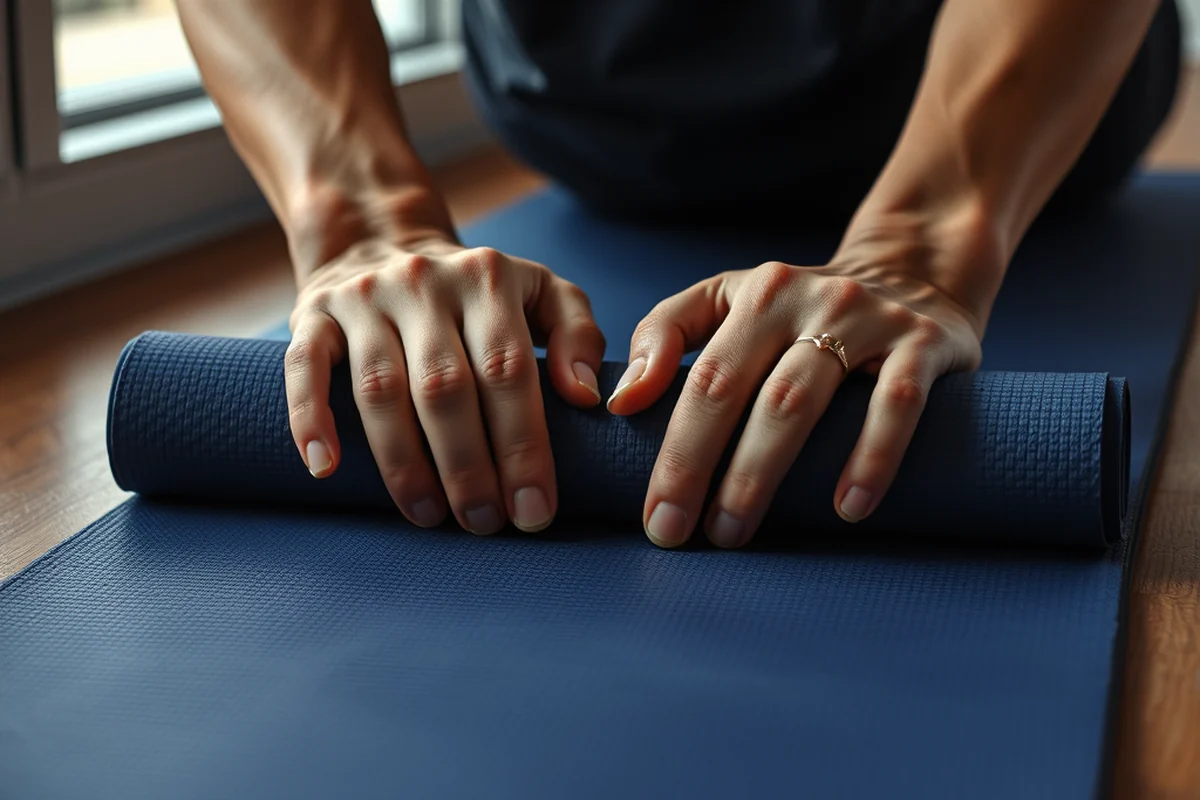
Compound movements like pull-ups, deadlifts, and bench presses are the gold standard in resistance training because they work multiple muscle groups simultaneously. For instance, a deadlift doesn’t just work the legs — it also engages the back, core, and even the grip. This is why I always prioritize these exercises in my routine.
I used to think I needed to do separate bicep curls and tricep extensions, but I’ve found that compound movements save time and deliver better results. When I do a pull-up, I’m not just working my arms — I’m also strengthening my back and core. This makes the entire movement more functional and effective.
The benefit of compound exercises is that they mimic real-life movements, which means your body learns to move more efficiently. That’s why I’ve noticed improvements in my posture and balance since incorporating these exercises into my routine.
Compound movements are the workhorses of resistance training — they do more with less.
Related: Resistance training bar
Related: Resistance band training for beginners
Related: Resistance training before and after
Related: Resistance Training Guide
Related: Resistance training pdf
Related: Resistance Training Exercises For Seniors
Related: Resistance Bands For Arm Exercises
Related: What Is Resistance Band Exercises
Related: What Exercises To Do With Resistance Bands
Related: Resistance Bands Exercises
Related: Resistance Exercises Seniors
Related: The Best Resistance Band Exercises
The Importance of Form and Technique
I used to push through pain and poor form to get the job done, but that only led to injuries and frustration. Now, I take time to learn the correct form for every exercise. For example, during a squat, I make sure my knees are aligned with my toes and my back is straight. This might feel awkward at first, but it makes all the difference in the long run.
Good form doesn’t just prevent injury — it also ensures that the right muscles are being worked. If I hunch over during a row, I might be using my back muscles incorrectly, which can lead to pain and reduced effectiveness. Taking the time to learn the correct form has helped me achieve better results with fewer injuries.
I’ve found that using a mirror or recording myself during workouts is a great way to check my form. It’s easy to get distracted and slip into bad habits, but seeing myself on screen helps me stay on track. This small adjustment has made a big difference in the quality of my workouts.
Use mirrors, recordings, or follow along with tutorials to ensure proper form and alignment.
“There’s something deeply satisfying about the feeling of a muscle contracting under resistance, the sweat on your brow, and the quiet progress you make ove”— Wrist Friendly Resistance Training editors
Related: Resistance Band Exercises For Beginners
The Role of Repetitions and Sets

When I started resistance training, I thought more was always better, but I quickly learned that quality matters more than quantity. For example, doing 3 sets of 10 push-ups with proper form is more effective than doing 5 sets of 15 with poor form. The key is to find a balance that challenges your muscles without causing burnout or injury.[3]
Different rep ranges target different muscle adaptations. Lower rep ranges (1-6 reps) with heavy weights build strength, while higher rep ranges (12-20 reps) with lighter weights build muscle endurance. I’ve found that alternating between these ranges in my routine has helped me maintain muscle tone and strength simultaneously.[4]
I’ve also learned that rest periods are just as important as the reps themselves. Taking 30-60 seconds between sets allows the muscles to recover, which is essential for maintaining performance and preventing fatigue. This small detail has made a big difference in the effectiveness of my workouts.[5]
The Benefits of Progressive Overload
I used to think that once I reached a certain level of strength, I would plateau and stop improving. But through progressive overload, I’ve learned that the key to continued growth is to keep challenging your muscles. This means increasing weight, changing the number of reps, or adjusting the difficulty of the exercises.
For example, when I first started doing push-ups, I had to do them on my knees. After a few weeks, I moved to a full push-up, and later, I added handstand push-ups to increase the challenge. This gradual increase in difficulty has helped me maintain a steady rate of improvement.
Progressive overload is not just about weight — it’s about making the exercises more challenging in any way possible. Whether it’s by increasing the number of sets, adding resistance, or changing the angle of the movement, the goal is to keep your muscles guessing and growing.
The Power of Body-Weight Resistance Training
One of the biggest myths I used to believe was that you needed a gym membership to build strength. But I’ve discovered that body-weight exercises like push-ups, planks, and lunges can be just as effective — if not more so — for developing strength and endurance. All you need is a bit of space and a willingness to push yourself.
I’ve used body-weight training to maintain my strength during times when I couldn’t go to the gym. When I was traveling, I packed resistance bands and did body-weight squats and push-ups in my hotel room. These exercises kept my muscles engaged and active, even without a barbell or dumbbells.
The beauty of body-weight resistance training is that it’s scalable. You can modify the difficulty of any exercise by adjusting your position — for example, doing push-ups on your knees instead of on your toes. This makes it accessible to people of all fitness levels.
Your body is the best weight you’ll ever lift — and it’s always available.
The Mind-Muscle Connection in Resistance Training
When I first started resistance training, I often focused on the movement rather than the muscles I was working. This led to poor form and ineffective workouts. Now, I take time to mentally engage with each muscle group I’m targeting. For example, when doing a bicep curl, I focus on contracting my biceps and keeping my elbows still.
The mind-muscle connection is the mental focus on the specific muscle being worked during an exercise. This not only increases the effectiveness of the movement but also helps prevent injury by ensuring that the right muscles are doing the work. I’ve noticed that when I focus on the mind-muscle connection, I get better results and feel more in control of my body.
I’ve found that practicing mindfulness during workouts helps me stay focused and present. This has improved my overall performance and made my workouts more enjoyable. Whether I’m doing a push-up or a deadlift, the mind-muscle connection makes a noticeable difference in the quality of my training.
🏋️ Beginner
Start with body-weight exercises like squats, push-ups, and planks to build a foundation of strength and form.
💰 Budget
Use resistance bands or household items like water bottles to add resistance without expensive equipment.
⏱️ Fastest
Perform high-intensity interval training (HIIT) with body-weight resistance exercises for quick, effective workouts.
🔥 Advanced
Incorporate heavy weights, complex movements, and progressive overload to push past plateaus and build elite strength.
🧘 Maintenance
Focus on low-impact, mobility-focused resistance exercises to sustain strength and flexibility over time.
| The mistake | Why it happens | The fix |
|---|---|---|
| Using too much weight too soon | This can lead to poor form, injury, and frustration as your muscles aren’t ready for the load. | Start with lighter weights or body weight, and focus on mastering the movement before increasing the load. |
| Neglecting rest and recovery | Not allowing your muscles to recover can lead to overtraining, fatigue, and a higher risk of injury. | Ensure you take rest days and allow adequate recovery time between workouts, especially for the same muscle groups. |
| Ignoring proper form for the sake of lifting more weight | Poor form increases the risk of injury and reduces the effectiveness of the exercise. | Focus on form first. Use a mirror or record yourself to ensure you’re performing each movement correctly. |
| Overlooking the importance of warm-ups and cool-downs | Skipping these can lead to muscle strains, joint pain, and reduced performance. | Always include a warm-up before your workout and a cool-down afterward to prepare your body and aid in recovery. |
Resistance Training Exercises
Common Questions
What are the best resistance training exercises for beginners?
How often should I do resistance training exercises?
Can I do resistance training exercises at home?
What should I do if I can’t complete a full set of an exercise?
Cite this guide
Wrist Friendly Resistance Training (2026). Resistance Training Exercises. https://loadmend.com/resistance-training-exercises/
Feel free to cite or share this guide.
References
- resistance training - College of Agriculture and Life Sciences (cales.arizona.edu)
- What Counts as Physical Activity for Older Adults - CDC (cdc.gov)
- Rest intervals and resistance training - Colorado State University (chhs.source.colostate.edu)
- Comparison of Otago Exercises Versus Resistance Training on ... (clinicaltrials.gov)
- MSK Management - Exercise (cms.illinois.gov)