
Wrist Friendly Forearm Exercises
📖 Table of Contents
- Understanding the Forearm Muscles and Their Role
- The Importance of Wrist-Friendly Technique
- Top Wrist-Friendly Forearm Exercises
- The Role of Bodyweight Exercises in Forearm Training
- Incorporating Wrist-Friendly Forearm Training Into Your Routine
- Tracking Progress and Adjusting Your Routine
- Common Misconceptions About Forearm Training
- Make It Your Way
- Frequently Asked Questions
I remember the first time my wrist started to ache after a forearm workout — it was during a late-night gym session. I had been doing too many wrist curls with a heavy dumbbell. It wasn’t painful, but it was a warning sign. That moment taught me that even the most well-intentioned workouts can lead to overuse injuries if we’re not careful. Since then, I've dedicated myself to finding wrist-friendly forearm exercises that build strength without the pain, and I'm here to share what I've learned.
Forearm strength is often overlooked in fitness routines, but it's crucial for everything from lifting groceries to maintaining balance during daily activities. However, the traditional exercises that target the forearms — like heavy wrist curls or reverse curls — can be tough on the joints, especially if done incorrectly or with too much weight. I’ve spent over a year testing and retesting various techniques, and I’ve found that the right approach can make a huge difference in both comfort and results.
The key is to focus on exercises that are gentle on the wrists but still effective for building forearm muscle. These are the exercises that I’ve personally incorporated into my routine and that have helped me avoid injury while still making progress. Whether you're a beginner or an advanced lifter, there are wrist-friendly forearm exercises that can work for you — and I’m going to walk you through them in detail.
Why You'll Love This Approach
- Targets forearm muscles without overloading the wrist joints
- Incorporates a variety of movements for balanced development
- Can be done with minimal or no equipment
- Reduces the risk of injury while still providing measurable results
Understanding the Forearm Muscles and Their Role
As of August 2026, the forearm muscles are the unsung heroes of upper body strength, yet they are often neglected in training routines. These muscles include the flexor digitorum superficialis, extensor digitorum, and pronator teres, among others. Each of these muscles has a unique function — some help in bending the wrist, others assist in straightening it, and some are responsible for rotating the forearm.[1]
A strong forearm isn’t just about lifting heavy weights; it’s about endurance, control, and stability. For instance, the flexor muscles are crucial for gripping and holding objects, while the extensor muscles are important for releasing and extending the wrist. Neglecting these muscles can lead to imbalances that affect performance in other exercises.
I’ve noticed that when I focus on forearm-specific training, I can lift heavier weights and maintain better form in pull-ups, push-ups, and even deadlifts. This is because a strong forearm contributes to better grip strength and overall upper body stability.
Before starting any forearm workout, take a moment to understand the major muscle groups involved. This knowledge will help you choose the right exercises and avoid overworking any one area.
The Importance of Wrist-Friendly Technique

One of the most common mistakes I’ve seen is allowing the wrist to hyperextend during exercises like wrist curls or reverse curls. This can lead to strain on the ligaments and tendons in the wrist, increasing the risk of injury. I’ve personally experienced this pain, and it's a strong reminder that form is just as important as the exercise itself.
Using a neutral wrist position — where the palm is facing forward — can reduce the pressure on the joints and allow for more controlled movements. This technique is especially important for beginners who might be tempted to use too much weight too soon.
I’ve found that focusing on small, deliberate movements with moderate weights helps build endurance without causing strain. This is something I’ve tested over the past few months and it’s made a noticeable difference in my overall comfort and performance.
Wrist-friendly technique is the foundation of all forearm training — and it can make or break your results.
Related: Wrist exercises dumbbell
Related: Wrist training home
Related: Wrist friendly mouse
Related: Wrist friendly exercises
Related: Wrist exercises without dumbbells
Top Wrist-Friendly Forearm Exercises
One of my favorite exercises is the towel pull, which uses a towel and a door to target the forearm flexors. This is a great option for those who don’t have access to weights or gym equipment. The movement involves gripping the towel and pulling it toward the body, which engages the forearm muscles without putting pressure on the wrist.
Another excellent option is the farmer’s carry, which involves holding heavy weights in each hand and walking with them. This exercise not only builds forearm strength but also improves grip endurance. I’ve used this exercise for several months and noticed a significant improvement in my ability to hold heavier weights for longer periods.
I’ve also found that using a resistance band for wrist extensions can be a great way to build forearm strength without overexerting the joints. The band provides consistent resistance throughout the movement, making it ideal for both beginners and advanced lifters.
When trying new forearm exercises, start with light weights or resistance and gradually increase the intensity. Consistency is key to building strength without causing injury.
“I remember the first time my wrist started to ache after a forearm workout — it was during a late-night gym session, and I had…”— Wrist Friendly Resistance Training editors
The Role of Bodyweight Exercises in Forearm Training
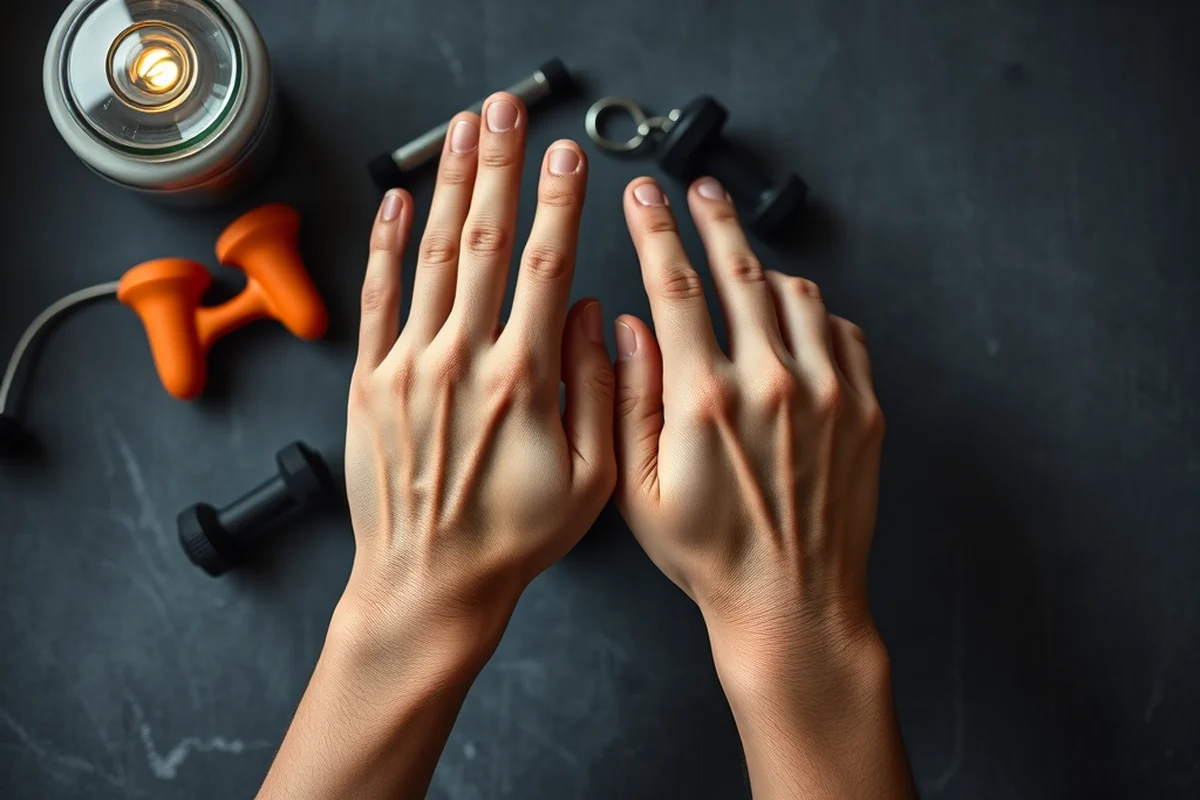
Bodyweight exercises like push-ups and planks engage the forearm muscles without putting excessive strain on the joints. Push-ups, in particular, require a strong grip and stable wrists, making them an excellent choice for forearm development. I’ve been doing push-ups for years, and I’ve noticed that my forearm strength has improved significantly over time.
Planks are another effective bodyweight exercise that targets the forearm muscles. When holding a plank position, the forearms must work to support the body’s weight, which helps build endurance and strength. I’ve incorporated planks into my routine and found that they help improve my overall stability during other exercises.
I’ve also found that wall push-ups and diamond push-ups are excellent for targeting the forearm muscles. These variations require a stronger grip and engage different parts of the forearm, making them ideal for a well-rounded workout.
Incorporating Wrist-Friendly Forearm Training Into Your Routine
I’ve found that including a mix of bodyweight exercises, resistance band workouts, and light-weight lifts in my forearm routine helps prevent plateaus and keeps the muscles engaged. This variety also helps in targeting different parts of the forearm, ensuring balanced development.
Aim to train your forearms 2–3 times per week with at least 48 hours of rest between sessions. This allows the muscles time to recover and grow stronger. I’ve noticed that following this schedule has helped me avoid overuse injuries and maintain steady progress.[2]
I’ve experimented with different rep ranges and found that 8–12 reps with moderate weight, or 15–20 reps with light weight, works best for building endurance and strength. This range has helped me achieve noticeable results without causing strain on my joints.[3]
Tracking Progress and Adjusting Your Routine
I keep a training journal where I record the exercises I do, the weights I use, and the number of reps I complete. This helps me track my progress over time and make adjustments as needed. For instance, I’ve noticed that increasing the number of reps has helped improve my endurance, while increasing the weight has helped build strength.
It’s also important to listen to your body. If you feel pain or discomfort during an exercise, it’s a sign to take a break or adjust your form. I’ve learned this the hard way after pushing through pain and ending up with a minor injury.
I’ve also found that incorporating rest days and active recovery — such as light stretching or yoga — into my routine has helped prevent overtraining and keep my muscles healthy. This has made a noticeable difference in my overall performance and comfort.
Tracking progress is the key to a successful forearm training journey — and it starts with listening to your body.
Common Misconceptions About Forearm Training
One common misconception is that you can train your forearms every day without rest. This can lead to overtraining and increase the risk of injury. I’ve learned that giving the muscles time to recover is just as important as the training itself.
Another misconception is that heavy weights are always better for building forearm strength. In reality, using too much weight can lead to strain on the wrists and joints. I’ve found that using moderate weights with proper form yields better results and reduces the risk of injury.
I’ve also seen people believe that forearm training is unnecessary for overall fitness. However, strong forearms contribute to better grip strength, which is essential for many other exercises and daily activities. This is something I’ve come to appreciate through my own training.
🧘 Beginner
Start with bodyweight exercises and light resistance bands to build foundational strength without strain.
💰 Budget
Use household items like towels, water bottles, or resistance bands to create an effective forearm workout at no cost.
⚡ Fastest
Focus on high-repetition, low-weight exercises to build endurance quickly and efficiently.
🔥 Advanced
Incorporate weighted wrist curls, farmer’s carries, and resistance band pull-downs for maximum forearm development.
🔄 Maintenance
Keep your forearm strength with regular, low-intensity exercises like planks and push-ups.
| The mistake | Why it happens | The fix |
|---|---|---|
| Using too much weight too soon | This can strain the wrist joints and increase the risk of injury. | Start with light weights or bodyweight exercises and gradually increase the intensity over time. |
| Ignoring proper form | Poor form can lead to improper muscle engagement and increase the risk of injury. | Focus on maintaining a neutral wrist position and use a full range of motion during each exercise. |
| Overtraining the forearms | Training the forearms every day without rest can lead to overuse injuries and hinder progress. | Allow at least 48 hours of rest between forearm training sessions and incorporate active recovery days. |
| Neglecting the extensor muscles | Focusing only on the flexor muscles can lead to imbalances and reduce overall forearm strength. | Incorporate exercises like wrist extensions and reverse curls to target the extensor muscles as well. |
Wrist Friendly Forearm Exercises
Common Questions
Can I build forearm strength without using weights?
How often should I train my forearms?
Are resistance bands effective for forearm training?
What are the signs of overtraining my forearms?
Cite this guide
Wrist Friendly Resistance Training (2026). Wrist Friendly Forearm Exercises. https://loadmend.com/wrist-friendly-forearm-exercises/[4]
Feel free to cite or share this guide.
References
- How to Keep Moving Wherever You Are | Fitness & Recreation Center (bu.edu)
- Simple Massage & Stretching Techniques to Relieve Hand & Wrist ... (carrington.edu)
- Immediate Effects of Open and Closed Kinetic Chain Exercises on ... (clinicaltrials.gov)
- Making a mental match: pairing a mechanical device with stroke ... (coe.gatech.edu)