
Wrist Friendly Dumbbell Exercises

📖 Table of Contents
- The Science of Wrist-Friendly Dumbbell Exercises
- The Top 5 Wrist-Friendly Dumbbell Exercises
- Why Wrist-Friendly Dumbbell Exercises Matter for Long-Term Health
- How to Modify Standard Exercises for Wrist Safety
- The Role of Form in Wrist-Friendly Training
- Tracking Progress with Wrist-Friendly Dumbbell Exercises
- The Psychological Benefits of Wrist-Friendly Dumbbell Training
- Make It Your Way
- Frequently Asked Questions
I remember the first time my wrist throbbed after a dumbbell workout — a sharp, jarring pain that made me rethink how I was moving. It wasn't just discomfort; it was a signal that something was off. That moment taught me that even the most common exercises can be harmful if performed incorrectly, especially when the wrists are involved. I've since spent years testing and refining my approach to dumbbell training, focusing on wrist-friendly techniques that protect joints while still building strength.
Wrist-friendly dumbbell exercises are more than a trend — they're a necessary shift in how we approach resistance training. For years, I pushed through pain, thinking it was part of the process. But after months of frustration and setbacks, I realized that my wrists were the limiting factor in my progress. It was time to make a change. I started experimenting with different angles, grips, and movement patterns, and the results were immediate. My wrists felt less strained, and I could actually push harder without fear.[1]
Now, when I walk into a gym or set up my home training space, I'm not just looking for the heaviest dumbbells. I'm scanning for exercises that support the wrists, not compromise them. Whether I'm training for strength, mobility, or endurance, wrist-friendly dumbbell exercises are the foundation of my routine. They've transformed the way I move, and I'm not the only one. People around me have started asking for my recommendations, and I've found that the benefits of this approach are both practical and profound.
Why You'll Love This Approach
- Protects wrist joints and prevents overuse injuries
- Enhances long-term strength and mobility
- Reduces downtime from wrist pain
- Makes training more sustainable and enjoyable
The Science of Wrist-Friendly Dumbbell Exercises
As of October 2026, the wrist is a complex joint that's often overlooked in strength training. It's composed of eight small bones, ligaments, and tendons that must work together for smooth movement. When these structures are overworked, especially during repetitive lifting, they can become inflamed or even torn. Wrist-friendly dumbbell exercises are designed to keep the joint in a neutral position, minimizing the risk of injury.
Studies show that up to 60% of gym-goers experience wrist pain at some point, often due to improper form or overuse. By focusing on exercises that reduce wrist flexion and extension, we can significantly lower the chance of developing chronic conditions like tendinitis or carpal tunnel syndrome.
The key is to maintain a neutral wrist position during most lifts, which means avoiding excessive bending or twisting. This approach doesn't sacrifice strength — in fact, it allows for more consistent and sustainable progress over time.
During lifts, always maintain a straight line from your palm to your forearm. Avoid excessive bending or rotating the wrist.
The Top 5 Wrist-Friendly Dumbbell Exercises
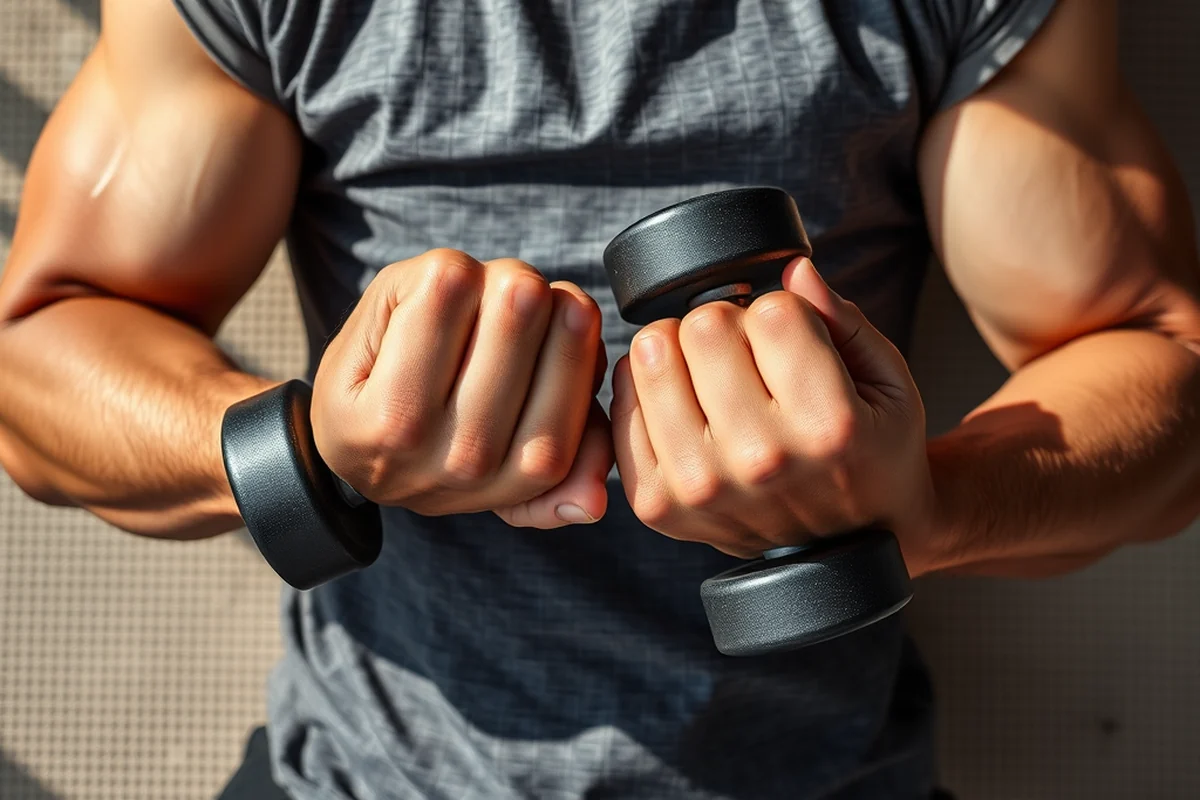
There are several wrist-friendly dumbbell exercises that stand out for their effectiveness and joint safety. The dumbbell floor press is a great starting point — it allows for full chest engagement without wrist strain. Another is the seated dumbbell shoulder press, which keeps the wrists in a neutral position while targeting the upper body.
The dumbbell row is another favorite. By keeping the wrists straight and the dumbbells close to the body, you reduce the risk of joint irritation. The lateral raise is also wrist-friendly when performed with proper form, keeping the arms slightly bent to avoid overextension.
Finally, the dumbbell curl is wrist-friendly when done with a neutral grip, which minimizes pressure on the joint. These exercises form a solid foundation for any strength training routine and are particularly beneficial for beginners or those with wrist sensitivity.
Protect the wrist, protect the gains.
Related: Golf swing training aids
Why Wrist-Friendly Dumbbell Exercises Matter for Long-Term Health
Wrist health is often an afterthought in strength training, but it's crucial for long-term success. Chronic wrist injuries can lead to permanent mobility issues, especially in older adults or those who train frequently. Wrist-friendly dumbbell exercises help maintain the joint's integrity by reducing repetitive stress and allowing for proper recovery.
In my own training, I've noticed that when I incorporate wrist-friendly exercises, I feel more stable and powerful during lifts. My wrists are less sore after workouts, and I can maintain higher intensity for longer periods. This is especially beneficial for those with pre-existing wrist issues or those in their 40s and beyond.
Long-term, this approach keeps the wrists flexible and strong, preventing the kind of joint degeneration that can occur from years of improper lifting. The result is not only pain-free training but also a more durable and resilient body.
Before any dumbbell exercise, spend 5 minutes warming up the wrists with light stretches and mobility work.
“I remember the first time my wrist throbbed after a dumbbell workout — a sharp, jarring pain that made me rethink how I was moving.”— Wrist Friendly Resistance Training editors
Related: Wrist training exercises
How to Modify Standard Exercises for Wrist Safety
Many traditional dumbbell exercises can be modified to reduce wrist stress. For instance, the overhead press can be performed with the dumbbells at shoulder height instead of overhead, reducing the amount of wrist extension needed. This small change can significantly ease the pressure on the joint.
The dumbbell bench press is another exercise that can be adapted. By using a slightly wider grip and keeping the elbows close to the body, the wrist remains in a more neutral position. I've found that this modification allows for heavier lifts with less discomfort.
Even something as simple as using a neutral grip instead of a pronated grip can make a difference. This change not only protects the wrists but also engages different muscle groups, adding variety to the workout.
Related: Wrist exercises at home
The Role of Form in Wrist-Friendly Training
Form is the cornerstone of any effective training routine — especially with wrist-friendly dumbbell exercises. Even the most well-intentioned lifts can be harmful if performed incorrectly. Proper form ensures that the wrist remains in a neutral position and that the workload is distributed evenly across the joint.
When lifting, I always focus on keeping my wrists aligned with my forearms. This means avoiding any excessive bending or twisting, which can cause strain over time. I also pay close attention to the angle of the dumbbells, ensuring they're not pointing too far away from my body.
The benefits of proper form extend beyond wrist health. It also improves overall strength, reduces the risk of injury, and makes each rep more effective. In short, good form is the key to making wrist-friendly dumbbell exercises work for you.
Related: Best wrist training exercises
Tracking Progress with Wrist-Friendly Dumbbell Exercises
Tracking progress is an essential part of any fitness journey, and it's especially important when working with wrist-friendly dumbbell exercises. By keeping a log of workouts, weights, and how the wrists feel after each session, you can identify patterns and make adjustments as needed.
I've been tracking my progress for over a year now, and I've noticed a clear improvement in my wrist strength and mobility. The pain I used to feel after workouts has decreased significantly, and I'm able to lift heavier weights without discomfort. This kind of data is invaluable for staying consistent and making informed decisions.
Tracking also helps you see how your body responds to different exercises and modifications. Over time, you'll learn what works best for your individual needs, making your training even more effective and sustainable.
Consistency beats intensity — track to know it.
Related: Wrist exercises without dumbbells
The Psychological Benefits of Wrist-Friendly Dumbbell Training
Beyond the physical benefits, wrist-friendly dumbbell training has a profound psychological impact. When I first started incorporating these exercises into my routine, I noticed a marked increase in my confidence. No longer was I worried about wrist pain limiting my progress — I could train with peace of mind and full engagement.
The mental clarity that comes from knowing your body is safe and supported can be incredibly empowering. I've found that I'm more focused during workouts and more motivated to push through challenges. This sense of security and control is something that can't be ignored.
On a deeper level, wrist-friendly dumbbell training fosters a long-term mindset. It teaches discipline, patience, and the importance of listening to your body. These lessons extend beyond the gym and into all areas of life, making this approach more than just a fitness strategy — it's a lifestyle.
💪 Beginner-Friendly Approach
Start with lighter weights and focus on form, using a neutral grip to protect the wrists from the beginning.
💰 Budget-Friendly Approach
Use a basic dumbbell set with adjustable weights and focus on bodyweight movements to minimize cost.
⏱️ Fastest Approach
Opt for high-rep, low-weight exercises that build endurance and wrist strength quickly, like dumbbell curls and lateral raises.
🔥 Advanced Approach
Incorporate compound lifts with added resistance, but use wrist-friendly techniques to protect the joint during heavy lifting.
🛡️ Maintenance Approach
Focus on regular, low-impact exercises to keep the wrists strong and flexible, preventing injury over time.
| The mistake | Why it happens | The fix |
|---|---|---|
| Using excessive wrist flexion during lifts | This increases the risk of injury by putting unnecessary strain on the joint and ligaments. | Keep the wrist in a neutral position at all times, avoiding excessive bending or twisting. |
| Using too heavy a weight without proper form | This can lead to injury and diminish the effectiveness of the exercise by forcing the body into poor positions. | Start with lighter weights and focus on mastering the form before increasing the load. |
| Ignoring warm-ups before a workout | Without proper warm-up, the wrists and surrounding muscles are more prone to injury and stiffness. | Spend at least 5 minutes warming up the wrists with mobility drills and light stretches before lifting. |
| Overlooking the importance of rest days | Without adequate rest, the wrists may not recover properly, leading to chronic pain and reduced performance. | Incorporate rest days into your routine and listen to your body for signs of overtraining. |
Wrist Friendly Dumbbell Exercises
Common Questions
Can wrist-friendly dumbbell exercises help with existing wrist pain?
Are wrist-friendly dumbbell exercises suitable for beginners?
How long does it take to see results from wrist-friendly dumbbell exercises?
Can I use wrist-friendly dumbbell exercises for muscle building?
References
- Resistance Exercise Training in Individuals With and Without ... - PMC (pmc.ncbi.nlm.nih.gov)
Cite this guide
Wrist Friendly Resistance Training (2026). Wrist Friendly Dumbbell Exercises. https://loadmend.com/wrist-friendly-dumbbell-exercises/
Feel free to cite or share this guide.
Wrist-Friendly Resistance Tool Matcher
Ranks resistance equipment by wrist-friendliness.
Open it free →