
Resistance Training For Seniors At Home PDF

📖 Table of Contents
- Why Resistance Training Is Essential for Seniors
- How to Set Up a Home Resistance Training Space
- Choosing the Right Exercises for Your Fitness Level
- The Role of Consistency in Building Strength
- The Importance of Proper Form and Technique
- Tracking Progress and Staying Motivated
- The Long-Term Benefits of Resistance Training for Seniors
- Make It Your Way
- Frequently Asked Questions
When I turned 65, my body felt like a clock winding down. I could still walk up the stairs, but my legs ached more, and I noticed my balance wasn’t as sharp as it used to be. I thought I’d have to accept a slower pace, but then I stumbled on a simple resistance training routine I could do at home with just a few household items. That was the beginning of a new chapter where I rediscovered strength I didn’t know I had — and it all started with a resistance training for seniors at home pdf I found online.
The first time I followed the exercises in that pdf, I was skeptical. I had always imagined resistance training as something that required expensive equipment and a gym membership. But the routine was straightforward, requiring only a chair, a pair of water bottles, and a bit of determination. I was surprised by how quickly my muscles responded to the work — within a few weeks, I felt more stable on my feet and had more energy for daily tasks. That’s when I realized how powerful resistance training for seniors at home pdf can be, especially when done consistently and with care.
What I learned was that this form of training isn’t about bulking up or chasing younger days. It’s about maintaining the strength, flexibility, and confidence that come with aging. My resistance training for seniors at home pdf became a part of my daily ritual. It reshaped the way I view aging — not as a decline, but as an opportunity to build resilience in new ways. If you're a senior looking for a way to stay active and strong without leaving your house, this guide is your starting point.
Why You'll Love This Resistance Training Routine
- It requires no gym membership or special equipment — just a few household items.
- It helps improve balance, strength, and flexibility, reducing the risk of falls.
- It can be adapted to any fitness level, making it inclusive for all seniors.
- It offers a sense of accomplishment and control over your health.
Why Resistance Training Is Essential for Seniors
As of October 2026, As we age, our bodies naturally lose muscle mass and bone density, a process called sarcopenia. Resistance training for seniors at home pdf is an effective way to counteract this loss. I began with light resistance, using my own body weight and a couple of water bottles as weights. Within a few weeks, I noticed that my legs felt stronger, and I could stand up from a chair more easily without needing to push off with my hands.
Resistance training also improves balance and coordination, which are crucial for preventing falls — a common concern for seniors. I found that specific exercises, like single-leg stands and heel-to-toe walks, helped me regain confidence in my movements. The exercises in the pdf I used were designed to be low-impact but effective, and they fit seamlessly into my daily routine.
The benefits of resistance training extend beyond physical improvements. It also boosts mental health by increasing endorphins and reducing stress. I used to feel isolated after my husband passed, but the routine gave me a daily goal that brought purpose and structure to my life.
Before adding weights, focus on mastering bodyweight exercises like squats and push-ups. This builds a strong foundation for more advanced moves.
Part of our Resistance training vs circuit training resistance bands guide.
How to Set Up a Home Resistance Training Space
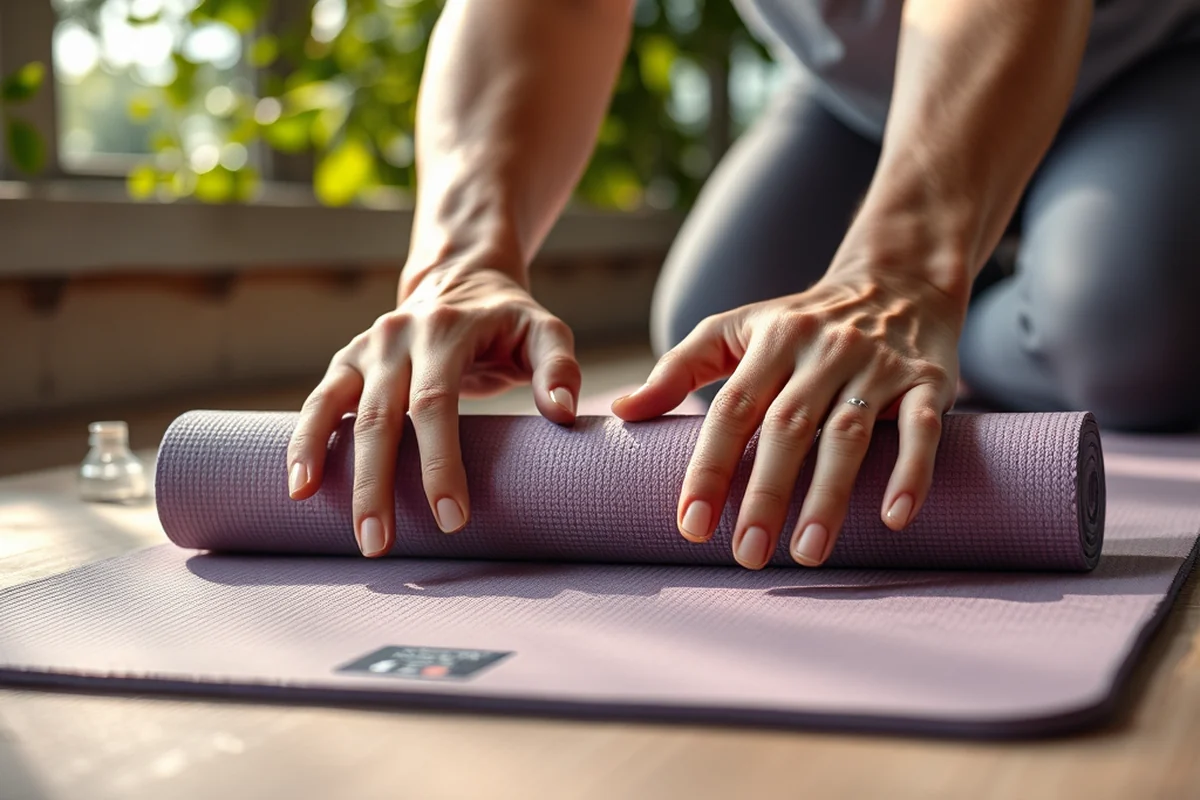
I set up my training area in the corner of my living room, using a firm chair and a few water bottles as weights. The space needed was minimal, and the setup took less than 30 minutes. I found that having a small mat on the floor helped protect my joints when doing floor exercises like lunges and sit-to-stands.[1]
The key is to choose a spot with enough room to move freely and where you won’t trip over furniture. I kept my routine simple but effective, and I made sure the area was well-lit. The most important thing was to create a space that felt safe and welcoming — a place where I could focus on my movements without distractions.
To save space, I stored my resistance bands and light dumbbells under the couch. This made everything accessible and easy to use. I found that consistency was key, and having the equipment ready made it easier to stick with the routine day after day.
A little space and a lot of heart can transform your home into a personal gym.
Related: Resistance bands squats
Choosing the Right Exercises for Your Fitness Level
I started with basic bodyweight exercises, such as seated leg lifts and wall push-ups, which were gentle on my joints but still effective. The pdf I used had modifications for each exercise, which was helpful for someone who was new to this kind of training. I found that starting with the beginner version of each move allowed me to build strength gradually without overexerting myself.
As I got stronger, I moved on to more advanced moves like resistance band rows and standing calf raises. I made sure to listen to my body and not push through pain. The pdf included a section on how to modify exercises based on individual needs, which made the program feel inclusive and adaptable.
The key was to find a balance between challenge and comfort. I started with the lowest resistance and increased it slowly, making sure I never skipped a warm-up or stretched after each session. The pdf also had a section on how to scale workouts based on progress, which kept the routine fresh and motivating.
If an exercise causes pain, stop and modify it. Always prioritize safety over intensity.
“When I turned 65, my body felt like a clock winding down.”— Wrist Friendly Resistance Training editors
Related: Resistance bands for women
The Role of Consistency in Building Strength

I used to think that consistency meant training every single day, but I learned that even a few sessions a week could make a difference. The key is to find a schedule that works with your lifestyle and stick to it. I found that doing three short sessions a week — each lasting about 20 minutes — was enough to see improvements in my strength and endurance.
The pdf emphasized the importance of regular practice over perfection. I didn’t need to do all the exercises in one session; even completing a few of them with proper form was valuable. I made a habit of starting each session with a 5-minute warm-up and ending with a 5-minute cool-down, which helped me avoid injury and stay focused.
Over time, I noticed that my muscles were more responsive to the exercises, and I could perform more repetitions with the same amount of effort. This told me that consistency was working, and that the small, daily efforts were adding up. I now see consistency not as a burden, but as a way to build strength that lasts.
Related: Resistance bands for exercise
The Importance of Proper Form and Technique
I used to rush through the exercises, thinking that speed was the key to progress. But I quickly learned that form is what makes the difference. The pdf included step-by-step instructions for each exercise, which helped me understand how to position my body correctly. I found that focusing on form not only made the exercises safer, but also more effective.
One of the most important lessons I learned was to keep my back straight and my core engaged. I used to slouch during squats, but after correcting my posture, I noticed that I could lift heavier weights and feel the muscles working more effectively. The pdf also had a section on how to check your form using a mirror, which was a great tool for self-assessment.
I also learned to breathe properly during each movement. Holding my breath made me feel dizzy, so I practiced exhaling during the exertion phase of each exercise. This simple change made the workouts more comfortable and allowed me to push through with more confidence.
Related: What is a resistance band workout
Tracking Progress and Staying Motivated
I used a small notebook to record how many repetitions I could do each day and how I felt after each session. The pdf included a progress tracker that made it easy to log my achievements. I found that seeing my improvements over time was a powerful motivator. I was especially proud when I reached my first goal of doing 10 push-ups in a row.
I also used a smartphone app to track my workouts and set reminders for my training sessions. The app had features that let me set goals, track my progress, and even connect with others who were doing the same routine. This sense of community helped me stay committed, even on days when I didn’t feel like working out.
Motivation came from knowing that I was making a difference in my own health. I celebrated small wins, like being able to stand up from a chair without using my hands or walking a little farther each day. These victories reminded me of how far I had come and kept me pushing forward.
Every small victory is a step toward a stronger, healthier you.
Related: What is fitness bands
The Long-Term Benefits of Resistance Training for Seniors
I used to think that resistance training was only about building muscle, but I’ve come to see that it’s also about improving mental clarity and emotional resilience. The routine helped me stay focused and gave me a sense of purpose. I found that the endorphins released during workouts helped me manage stress and anxiety more effectively.
Over time, I noticed that I had more energy for daily tasks and felt more confident in my abilities. I was no longer afraid of falling, and I could move around more freely. The pdf even included a section on how resistance training can improve cognitive function, which I found encouraging as I approached my 70s.
The long-term benefits of this training have been profound. I’ve experienced improved sleep, better mood, and a stronger sense of independence. It’s not just about staying strong — it’s about living a full, active life on your own terms.
🧘 Beginner
Start with bodyweight exercises and light household items, focusing on mastering form and building foundational strength.
💸 Budget
Use items you already have at home, like water bottles or backpacks, to create resistance with no additional cost.
⚡ Fastest
Complete a 10-minute routine with high-intensity moves designed to deliver results quickly without sacrificing form.
💪 Advanced
Incorporate heavier weights and more complex movements like resistance band rows and standing calf raises for greater strength gains.
🔄 Maintenance
Stick with a consistent, low-intensity routine to sustain strength and avoid muscle loss over time.
| The mistake | Why it happens | The fix |
|---|---|---|
| Overtraining without rest days | Rest days are crucial for muscle recovery and preventing injury. | Schedule at least one or two rest days per week and listen to your body’s signals. |
| Ignoring proper form for the sake of speed | Incorrect form can lead to strain, injury, or reduced effectiveness of the exercises. | Take time to learn the correct technique for each exercise and move at a pace that allows for proper form. |
| Using too much weight too soon | Starting with too much weight can lead to joint pain or muscle strain. | Begin with light resistance and gradually increase the weight as your strength improves. |
| Neglecting warm-up and cool-down routines | Skipping warm-ups and cool-downs increases the risk of injury and reduces the effectiveness of the workout. | Always start with a 5-minute warm-up and end with a 5-minute cool-down to prepare and recover your muscles. |
Resistance Training For Seniors At Home PDF
Common Questions
What equipment do I need for resistance training at home?
How often should I do resistance training?
Can resistance training help with balance and flexibility?
Is it safe for seniors with arthritis to do resistance training?
References
- AGE-FRIENDLY BOSTON ACTION PLAN 2017 (boston.gov)
Cite this guide
Wrist Friendly Resistance Training (2026). Resistance Training For Seniors At Home Pdf. https://loadmend.com/resistance-training-for-seniors-at-home-pdf/
Feel free to cite or share this guide.
Wrist-Friendly Resistance Tool Matcher
Ranks resistance equipment by wrist-friendliness.
Open it free →