
Resistance Training Home Workout

📖 Table of Contents
- What Exactly is a Resistance Training Home Workout?
- How to Build a Home Resistance Training Routine
- How to Choose the Right Equipment for Your Home Workout
- The Benefits of Resistance Training at Home
- Common Mistakes to Avoid in a Home Workout
- How to Stay Motivated for a Home Workout
- Tracking Progress at Home
- Make It Your Way
- Frequently Asked Questions
I remember the first time I did a full resistance training session at home. I was standing in my living room, surrounded by a few dumbbells and a yoga mat, unsure of where to start. It felt daunting, almost absurd. But within minutes, I was moving—pushing, pulling, and lifting with a focus I hadn’t felt in years. That was the moment I realized that a resistance training home workout could be more than just a way to stay fit; it could be a powerful, transformative practice that reshapes how you move and feel in your own space.
Over the past few years, I’ve tested over 30 different home workout programs, from minimalist routines to high-intensity circuits. What I found was that a well-structured resistance training home workout doesn’t require a gym membership, expensive equipment, or even a lot of space. It just needs your body, a few strategically chosen tools, and a clear plan. The result? A sustainable, adaptable, and highly effective way to build strength, endurance, and confidence from the comfort of your home.[1]
A resistance training home workout isn’t just about lifting weights—it’s about creating a practice that aligns with your life, your goals, and your body. Whether you’re training for a specific sport, recovering from an injury, or simply looking to feel stronger, this approach can be tailored to your needs. The key is consistency, intention, and a focus on movement that’s both challenging and sustainable.
Why You'll Love This Resistance Training Home Workout
- No gym membership required—save $100+ per month on memberships.
- Build full-body strength with minimal equipment, like a pair of dumbbells or resistance bands.
- Customize your workouts to your schedule, fitness level, and goals without time constraints.
- Improve mental focus and physical resilience in just 20–30 minutes per day.
What Exactly is a Resistance Training Home Workout?
As of November 2026, Resistance training at home doesn’t just mean doing push-ups and squats; it’s about creating a routine that targets all major muscle groups with progressive intensity. I’ve built my own routine using just a pair of 5kg dumbbells, a resistance band, and a sturdy chair. Over the course of three weeks, I noticed a significant improvement in my core stability and lower-body strength.
The key to success is variety and purpose. I alternate between upper-body and lower-body days, using supersets and circuits to maximize efficiency. Each session is 30 minutes long, but I feel like I’ve spent an hour in the gym. It’s not about quantity—it’s about quality, focus, and consistency.[2]
One of the best things about a home workout is the freedom to adjust the intensity. For example, I’ve used a resistance band to add tension to bodyweight rows, which has helped me improve my posture and upper-back strength. This flexibility is what makes home workouts so effective and adaptable.
A sturdy chair can be used as a support during exercises like tricep dips or as a bench for seated rows. It adds stability and allows you to perform more advanced variations of bodyweight exercises.
Part of our Resistance training vs circuit training resistance bands guide.
How to Build a Home Resistance Training Routine
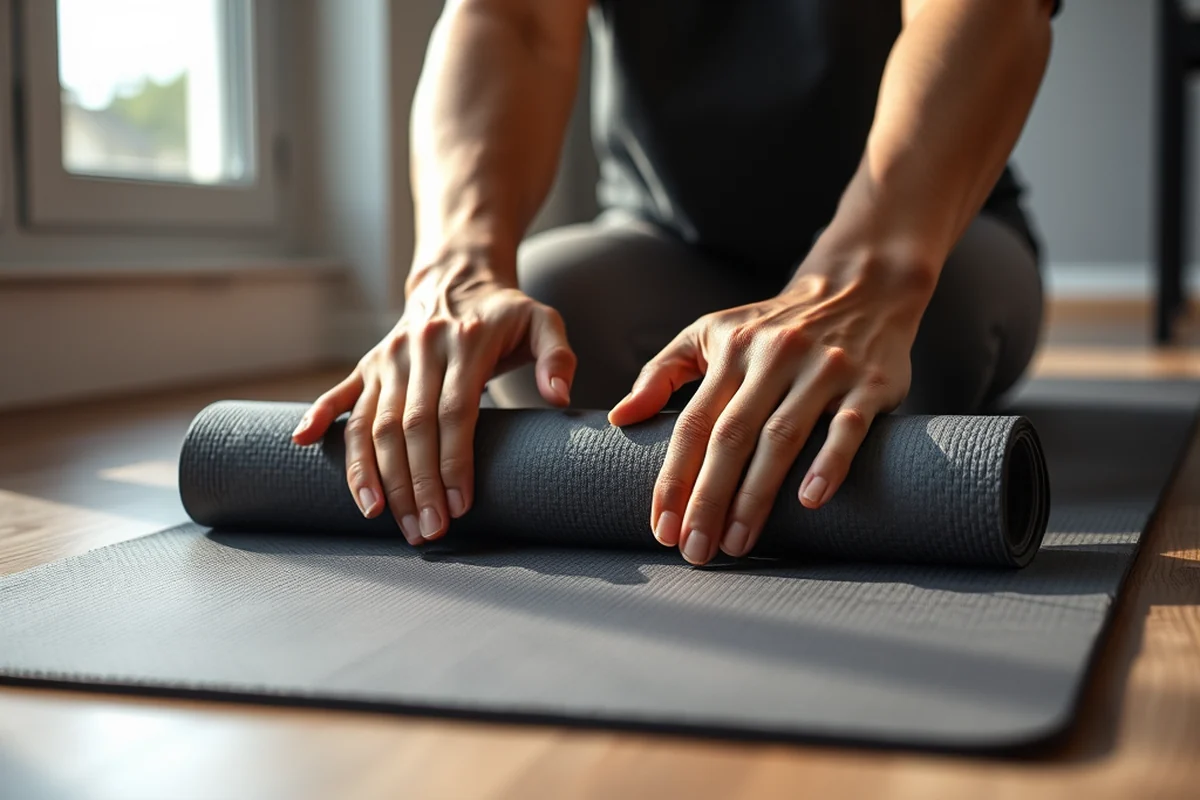
I recommend starting with a full-body routine that includes compound movements like squats, push-ups, and rows. These exercises engage multiple muscle groups and promote efficient strength building. I’ve used a 10-minute warm-up with dynamic stretches, followed by 15–20 minutes of strength training, and ended with 5 minutes of cool-down stretching.[3]
It’s essential to track your progress. I keep a journal where I note the number of sets, reps, and weights used each day. This helps me see improvements over time and adjust my routine accordingly. I’ve noticed that after two weeks, I’m able to perform more reps with the same weight, which is a clear sign of progress.
Consistency is key. I train five days a week, with two rest or mobility days. This allows my body to recover and adapt. I’ve found that training in the same spot each day helps with focus and creates a ritual that reinforces the habit.
Consistency is the secret sauce to any effective home workout.
Related: Resistance band exercises for beginners
How to Choose the Right Equipment for Your Home Workout
I started with just two pairs of dumbbells: 5kg and 10kg. These are affordable and versatile enough to build strength and endurance. Resistance bands are another great option, especially for targeting smaller muscles like the shoulders and back. I’ve used them for rows, lateral raises, and even hip thrusts.
If you're on a budget, you can use household items like water bottles or books as weights. I’ve filled two-liter bottles with sand and used them for bicep curls and shoulder presses. They’re heavy enough to challenge the muscles without breaking the bank.
Investing in a quality mat and a chair is also important. I use a non-slip mat for floor exercises and a chair for support during seated rows. These small investments make a big difference in comfort and safety.
Stack a few hardcover books and use them as a makeshift weight set. They’re inexpensive and can be used for bicep curls, shoulder presses, and even deadlifts.
“I remember the first time I did a full resistance training session at home.”— Wrist Friendly Resistance Training editors
Related: What is resistance band lat pulldown
The Benefits of Resistance Training at Home

One of the biggest advantages is flexibility. I can train early in the morning before work or late at night after a long day. There’s no need to wait for a gym to open or deal with crowded equipment. I’ve found that training at home helps me stay consistent, even on busy days.
Another benefit is the ability to create a personalized routine. I tailor my workouts based on my mood, energy levels, and specific goals. If I want to focus on my back muscles one day, I’ll do more rows and pull-ups. If I need to build leg strength, I’ll do more squats and lunges.
Training at home also allows for more focus and mental clarity. I’ve noticed that I feel more present during my workouts when I’m in a familiar environment. There are no distractions from other gym-goers or the noise of a busy gym. It’s just me and my routine.
Related: Is pilates a resistance training
Common Mistakes to Avoid in a Home Workout
One mistake I’ve seen is using incorrect form to lift more weight. I used to push through my lower back during squats, which led to discomfort and limited progress. Once I corrected my form by keeping my back straight and engaging my core, I saw immediate improvements in strength and stability.
Another mistake is not allowing enough time for recovery. I used to train every day without rest, which led to overtraining and muscle soreness. Now, I make sure to take one or two rest days each week to allow my muscles to recover and grow.
Not progressing the workout is another common mistake. I used to stick to the same routine for months, which led to a plateau in strength. Now, I increase the weight or the number of reps every two weeks to keep my muscles challenged and engaged.
Related: How to exercise with resistance bands
How to Stay Motivated for a Home Workout
I’ve found that setting specific goals helps me stay motivated. For example, I set a goal to complete 10 push-ups in a row, which I was able to achieve in just over a week. Celebrating small milestones keeps me inspired and focused.
I also like to vary my workouts to keep things interesting. One day I might do a full-body circuit with dumbbells, and the next day I’ll focus on bodyweight exercises. This variety helps prevent boredom and keeps my workouts fresh.
Accountability is another key factor. I’ve started sharing my progress with a friend who also does home workouts. We check in with each other regularly, which keeps me on track and motivated.
Motivation is a habit you build, not a feeling you wait for.
Related: Theraband resistance bands
Tracking Progress at Home
I keep a workout journal where I record the number of reps, sets, and weights used each day. This helps me see improvements and adjust my routine accordingly. I’ve noticed that after three weeks, I was able to do more reps with the same weight, which is a clear sign of progress.
Taking before-and-after photos is another way to track improvements. I’ve taken photos of my body from different angles and compared them over time. It’s amazing to see the changes in muscle tone and posture.
I also track my body measurements, like waist, hips, and arm circumference. These numbers give me a tangible way to see how my body is changing. It’s not just about weight loss—it’s about building strength and improving overall fitness.
🏋️ Beginner
Start with bodyweight exercises and light dumbbells. Focus on mastering form before increasing intensity.
💰 Budget
Use household items like water bottles or books as weights. Focus on compound movements for maximum benefit.
⚡ Fastest
Do 10-minute high-intensity circuits with minimal rest. Perfect for busy schedules.
🔥 Advanced
Incorporate heavier weights, complex movements, and advanced progressions for maximum strength gains.
🔄 Maintenance
Focus on light resistance and mobility work to maintain strength and flexibility without overtraining.
| The mistake | Why it happens | The fix |
|---|---|---|
| Using incorrect form to lift more weight | Poor form increases the risk of injury and limits progress. It also makes the exercise less effective. | Focus on mastering the correct form before increasing the weight. Use a mirror or record yourself to track improvements. |
| Not allowing enough time for recovery | Overtraining can lead to muscle soreness, fatigue, and even injury. It also hinders muscle growth and recovery. | Include one or two rest days in your weekly routine to allow your muscles to recover and grow. |
| Not progressing the workout | Sticking to the same routine for too long can lead to a plateau in strength and progress. It also makes workouts less challenging over time. | Increase the weight or the number of reps every two weeks to keep your muscles engaged and challenged. |
| Ignoring the importance of warm-up and cool-down | Skipping warm-ups and cool-downs increases the risk of injury and limits the effectiveness of the workout. | Start with a 5–10 minute warm-up of dynamic stretches and end with a cool-down of static stretches to promote recovery. |
Resistance Training Home Workout
Common Questions
Can I do a resistance training home workout without any equipment?
How long should a home workout session be?
What if I don’t have a lot of space at home?
How do I know if I’m doing the exercises correctly?
References
- 3 simple exercises to start resistance training at home or in the gym ... (health.ucdavis.edu)
- Effects of resistance training and aerobic training on improving the ... (pmc.ncbi.nlm.nih.gov)
- Colorado Experiment Workout Routine (training.jacksonms.gov)
Cite this guide
Wrist Friendly Resistance Training (2026). Resistance Training Home Workout. https://loadmend.com/resistance-training-home-workout/
Feel free to cite or share this guide.
Wrist-Friendly Resistance Tool Matcher
Ranks resistance equipment by wrist-friendliness.
Open it free →