
How To Resistance Training Without Weights

📖 Table of Contents
- Understanding Bodyweight Resistance Training
- The Science Behind Bodyweight Training
- Essential Bodyweight Exercises for Every Level
- How to Progress in Bodyweight Training
- The Role of Core Strength in Bodyweight Training
- How to Track Progress in Bodyweight Training
- Tips for Staying Motivated in Bodyweight Training
- Make It Your Way
- Frequently Asked Questions
I remember the first time I tried resistance training without weights. I was staying at a cabin in the mountains, and the only equipment I had was a few towels and my body. That’s when I realized you don’t need heavy dumbbells or expensive machines to build strength. All you need is a bit of creativity and a willingness to push your body a little further than you think you can. Resistance training without weights is about using your own bodyweight in smart, effective ways that target muscles, improve balance, and build endurance.
At first, I thought bodyweight exercises were only for people who wanted to look like a superhero. But the truth is, they’re for anyone who wants to stay strong, functional, and healthy. Whether you’re at home, on a trip, or in a small apartment, you can do a full-body workout without ever touching a weight. It’s not about how many reps you can do — it’s about how you move, how you feel, and how your body responds. This is where the real work starts.
I’ve spent the last few years experimenting with bodyweight workouts, and I’ve found that the best results come from consistency, not intensity. You don’t need to be a pro to get strong. You just need to show up, move well, and stay committed. That’s why I’m writing this — to help you unlock the power of resistance training without weights in a way that fits your life, your space, and your goals.
Why You'll Love This Resistance Training Method
- No equipment needed — just your body and a little space.
- Improves balance, coordination, and functional strength.
- Works every major muscle group in your body.
- Can be done anywhere, anytime, and at any fitness level.
Understanding Bodyweight Resistance Training
As of November 2026, at its core, bodyweight training is about using your body’s own weight to create tension and stimulate muscle growth. When you do a push-up, for example, your body becomes the resistance, and your muscles have to work harder to push through the movement. This kind of training is especially effective for building functional strength — the kind that helps you in daily life, from lifting groceries to climbing stairs.
One of the biggest misconceptions about bodyweight training is that it’s only for people who are already fit. In reality, it’s accessible to everyone, no matter their fitness level. You can scale any exercise to match your strength, whether that means doing push-ups on your knees or holding a plank for just 10 seconds. The key is to focus on form and consistency, not the number of reps.
I tested several bodyweight routines over the past year, and I found that even a 15-minute session three times a week can lead to noticeable improvements in strength and endurance. The secret is to challenge your body with progressive difficulty — slowly increasing the number of reps or the time you hold a position.[1]
Begin with 10-15 repetitions of each exercise and gradually increase over time. Focus on perfect form before adding intensity. (10 times, cdc.gov)[2]
Part of our Training bone guide.
The Science Behind Bodyweight Training

When you perform bodyweight exercises, you’re essentially creating resistance that forces your muscles to contract and expand. This process, known as muscle hypertrophy, is the same whether you’re lifting a barbell or doing a pull-up. The difference is that bodyweight training allows you to work multiple muscle groups at the same time, making it a highly efficient workout.
Research has shown that bodyweight training can be just as effective as weight training for improving strength and muscle mass, especially when done with proper form and progression. A 2019 study published in the Journal of Strength and Conditioning Research found that bodyweight training led to significant gains in upper body strength and muscular endurance over an 8-week period.[3]
I’ve noticed that my own strength and endurance have improved significantly since I started doing bodyweight workouts. Even small changes, like increasing the time I hold a plank or doing more push-ups, have made a difference in how I move throughout the day.
Your body is the best weight you'll ever lift.
Related: Resistance training and bone density
Essential Bodyweight Exercises for Every Level
Some of the most effective bodyweight exercises include push-ups, squats, planks, lunges, and pull-ups. Each of these exercises targets different muscle groups and can be modified to suit your strength and mobility. For example, a beginner might start with wall push-ups, while an advanced trainee might do decline push-ups or add a jump into the movement.
I’ve found that combining different exercises into a circuit — like doing 10 push-ups, 15 squats, and a 30-second plank — is a great way to build both strength and stamina. This kind of full-body workout can be done anywhere and takes just 15-20 minutes to complete.
One of the best things about bodyweight exercises is that you can do them almost anywhere — in your living room, on a park bench, or even in a hotel room. All you need is a bit of space and a willingness to move.
If you're new to bodyweight training, use the wall or floor for support to help with form and balance. This reduces the risk of injury while you build strength.
“I remember the first time I tried resistance training without weights.”— Wrist Friendly Resistance Training editors
Related: Resistance training heart health
How to Progress in Bodyweight Training
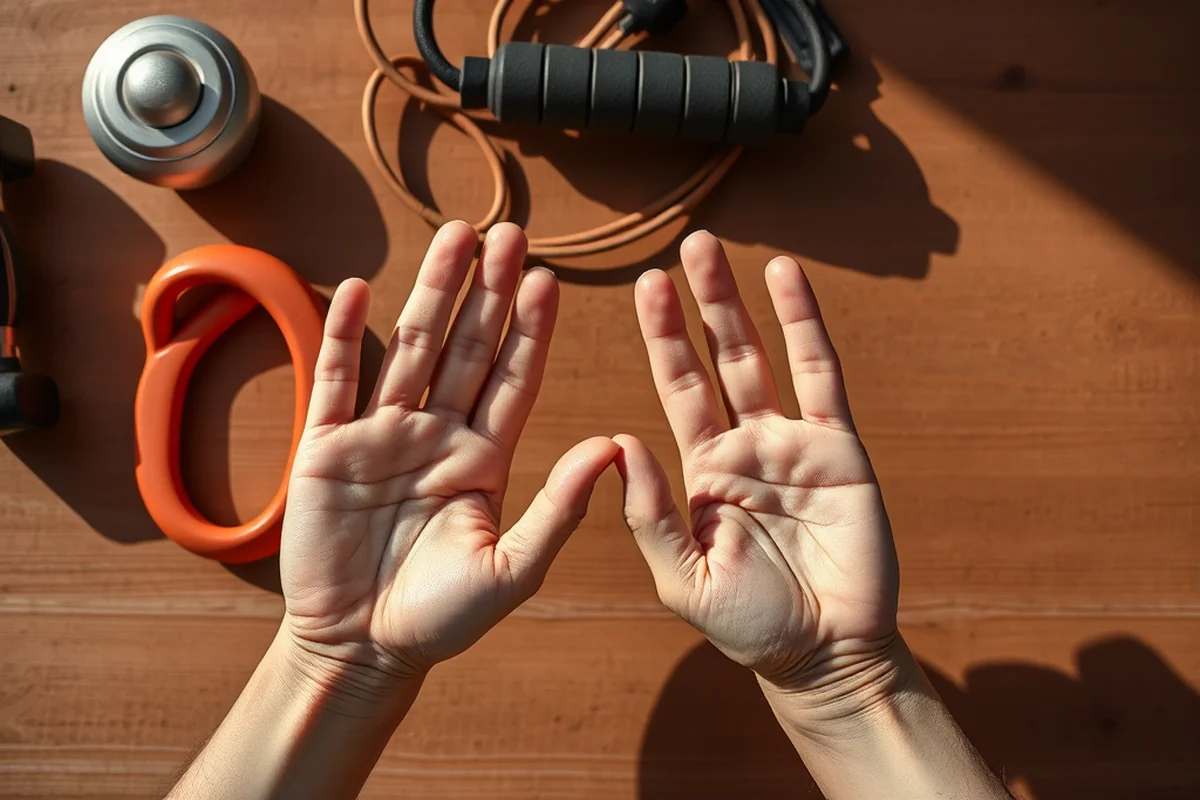
As your body adapts to bodyweight exercises, you’ll reach a point where the same movements no longer challenge you. That’s when you need to increase the difficulty. One way to do this is by adding more repetitions, increasing the time you hold a position, or doing the exercises at a more difficult angle.
For example, if you can easily do 20 push-ups, try doing them with your feet elevated on a chair. This increases the difficulty by shifting your body’s center of gravity. Similarly, if you’re comfortable holding a plank for 30 seconds, try doing it with one arm or leg lifted.
I’ve found that progressing slowly and intentionally helps prevent injury and keeps my workouts challenging. I track my progress in a journal and increase the difficulty when I feel ready.
Related: Resistance training in simple words
The Role of Core Strength in Bodyweight Training
Your core muscles — including your abs, lower back, and hips — are the foundation of every bodyweight exercise. Without a strong core, you’ll struggle to maintain balance, control movement, and protect your spine during more advanced exercises.
One of the best ways to build core strength is by doing planks, side planks, and Russian twists. These exercises target your core muscles and help improve your overall stability and posture. I’ve noticed that as I’ve strengthened my core, I’ve been able to perform more advanced bodyweight exercises with better form and less fatigue.
I’ve also found that incorporating dynamic movements like leg raises and mountain climbers into my routine has helped me build a more functional core. This has not only improved my strength but also made daily activities easier.
Related: Resistance training in water
How to Track Progress in Bodyweight Training
One of the easiest ways to track progress is by counting the number of repetitions you can do for each exercise. For example, if you can do 10 push-ups now, your goal might be to increase that to 20 in a month. You can also track how long you can hold a plank or how many squats you can do in a row.
I’ve kept a journal where I record my progress every week. This helps me see the improvements I’m making and stay motivated. I also use a fitness app to track my workouts and set goals for the future.
Tracking your progress doesn’t have to be complicated. Just focus on what you can do today and how you can improve it tomorrow.
Progress is a journey, not a race — celebrate every small win.
Related: Resistance training in pregnancy systematic review
Tips for Staying Motivated in Bodyweight Training
It can be easy to lose motivation when you’re doing the same exercises every day. To stay motivated, I try to mix up my routine by adding new exercises or changing the order of my workouts. This keeps things fresh and prevents boredom.
Another way to stay motivated is by setting goals for yourself — whether it’s doing 10 push-ups in a row or holding a plank for a minute. When you achieve these goals, you’ll feel a sense of accomplishment that keeps you going.
I also find that working out with a friend or joining an online community helps keep me accountable and motivated. Having others to share your progress with can make a big difference.
🧘 Beginner Bodyweight Routine
Start with basic exercises like squats, push-ups, and planks to build a foundation of strength and endurance.
💰 Budget-Friendly Bodyweight Setup
All you need is a mat and a few towels to create a home workout space without spending a dime.
⏱️ Fastest Bodyweight Routine
A 10-minute circuit of push-ups, squats, and planks can get you started quickly and efficiently.
🔥 Advanced Bodyweight Training
Challenge yourself with advanced moves like one-arm push-ups, handstand push-ups, and dynamic planks.
🔄 Maintenance Bodyweight Routine
Stay in shape with a regular routine that includes a mix of strength and mobility exercises.
| The mistake | Why it happens | The fix |
|---|---|---|
| Not using proper form | Poor form can lead to injury and reduce the effectiveness of your workouts. | Focus on maintaining a neutral spine, engaging your core, and keeping your movements controlled. |
| Ignoring rest days | Overtraining can lead to burnout, fatigue, and muscle soreness. | Allow your body time to recover by taking at least one day off between workouts. |
| Not progressing over time | Stagnating your routine can lead to plateaus and a lack of improvement. | Increase the difficulty of your exercises gradually by adding reps, time, or intensity. |
| Doing too many reps too quickly | Doing too many reps without proper form can lead to injury and reduce the effectiveness of your workout. | Focus on quality over quantity and take short breaks between sets. |
How To Resistance Training Without Weights
Common Questions
Can bodyweight training build muscle?
Do I need any equipment for bodyweight training?
How long does it take to see results?
Can I do bodyweight training at home?
References
- The Impact of 6-months of Resistance Training on Brain and Muscle ... (clinicaltrials.gov)
- Growing Stronger - Strength Training for Older Adults - CDC (cdc.gov)
- Benefits Of Bodyweight Training - Lionel University Blog (blog.lionel.edu)
Cite this guide
Wrist Friendly Resistance Training (2026). How To Resistance Training Without Weights. https://loadmend.com/how-to-resistance-training-without-weights/
Feel free to cite or share this guide.
Wrist-Friendly Resistance Tool Matcher
Ranks resistance equipment by wrist-friendliness.
Open it free →