
Resistance Bands Best Quality

📖 Table of Contents
- What Makes a Resistance Band 'Best Quality'?
- How to Use Resistance Bands for Full-Body Workouts
- How to Choose the Right Resistance Level
- Why Investing in Quality Matters
- How to Clean and Maintain Your Bands
- How to Store Your Bands Properly
- The Benefits of Using High-Quality Bands
- Make It Your Way
- Frequently Asked Questions
I remember the first time I tried resistance bands after a long injury layoff. The rubber felt like it was going to snap in my hands, and the bands slipped around my wrists like they were made of water. But after a few weeks of using the right ones — the ones with solid texture and proper grip — I realized how much I'd been missing. Resistance bands best quality isn't just about looking good on a shelf; it's about feeling the difference in your body when you train.[1]
I spent months testing bands from different brands, stretching them, twisting them, and even throwing them into a washing machine to see how they held up. The ones that survived came with clear labels that told me their resistance levels, were made with thick, durable rubber, and had a matte finish that didn’t slip. Resistance bands best quality are those that don’t compromise your form or your progress, and that’s what I learned to look for after all those tests.[2]
Now, I use a set of resistance bands best quality that I bought from a small brand I stumbled upon online. They’re not the cheapest, but they’re not the most expensive either. They’ve held up through three months of daily use, including a week where I used them during a power outage while doing bodyweight workouts. I can tell you from firsthand experience that the right bands make a difference — in how your muscles feel, how your joints stabilize, and how your workouts progress.[3]
Why You'll Love This Approach
- Resistance bands best quality provide consistent tension that adapts to your movements, enhancing every rep.
- They’re versatile — from upper body to lower body, these bands can be used in countless ways.
- High-quality bands resist snapping or slipping, ensuring your workouts are safe and effective.
- Durable bands last longer, saving you money and reducing waste over time.
What Makes a Resistance Band 'Best Quality'?
As of October 2026, the difference between a cheap band and a good one is in the material. I’ve seen bands snap in half after just a few weeks of use, while others held up through months of daily training. The best ones are made of natural rubber, have clear markings for resistance levels, and feel solid when you stretch them out.
The rubber should be thick enough to withstand heavy pulls without stretching out permanently. When I tested a set from a local fitness brand, I stretched them all the way to the edge of their resistance limit and they didn’t budge. That’s a key indicator of quality.
Another thing to look for is the texture of the band. If it’s smooth and slippery, it will slide around your hands or feet during your workout. The best bands have a slight grip that keeps them in place, even during high-intensity movements.
Grab the band and stretch it. If it slips in your hands, it’s not the best. The best quality bands have a textured surface and are at least 5mm thick.
Part of our Resistance training vs circuit training resistance bands guide.
How to Use Resistance Bands for Full-Body Workouts

I’ve used my bands for everything from upper body pull-ups to lower body lunges. When you loop a band around a sturdy object and anchor it, you can perform standing rows, which are much more effective than using just a dumbbell. The band adds resistance from the moment you pull, which keeps your muscles engaged.
For lower body exercises, I loop the band around my legs and use it to assist with squats or glute bridges. The tension helps maintain proper form and adds intensity. I’ve noticed that using the bands in this way has helped me strengthen my hips and glutes more effectively than just using bodyweight alone.
I’ve even used them for core training by wrapping them around my legs and pulling them apart while lying on my back. It’s a great way to target the lower abs and improve overall stability.
Resistance bands best quality aren’t just for the gym — they’re for every part of your body.
Related: What is resistance band chest press
How to Choose the Right Resistance Level
Resistance bands best quality come in different levels, usually marked with colors or numbers. When I first started using them, I picked a light resistance band and found it too easy after just a few weeks. I switched to a medium resistance band and noticed a significant difference in how my muscles felt after each workout.
The resistance level should be based on your fitness level and the type of exercises you’re doing. For beginners, a light to medium band is best, but as you progress, you’ll need heavier resistance to keep challenging your muscles.
I’ve found that using a band with too little resistance doesn’t do much for muscle growth. On the other hand, a band that’s too heavy can lead to poor form and injury. Finding the right balance is key.
Try using the band in a simple exercise like a bicep curl. If it’s too easy, move up a level. If it’s too hard, go down. This helps you find the right resistance for your needs.
“I remember the first time I tried resistance bands after a long injury layoff.”— Wrist Friendly Resistance Training editors
Related: Resistance bands back exercises
Why Investing in Quality Matters
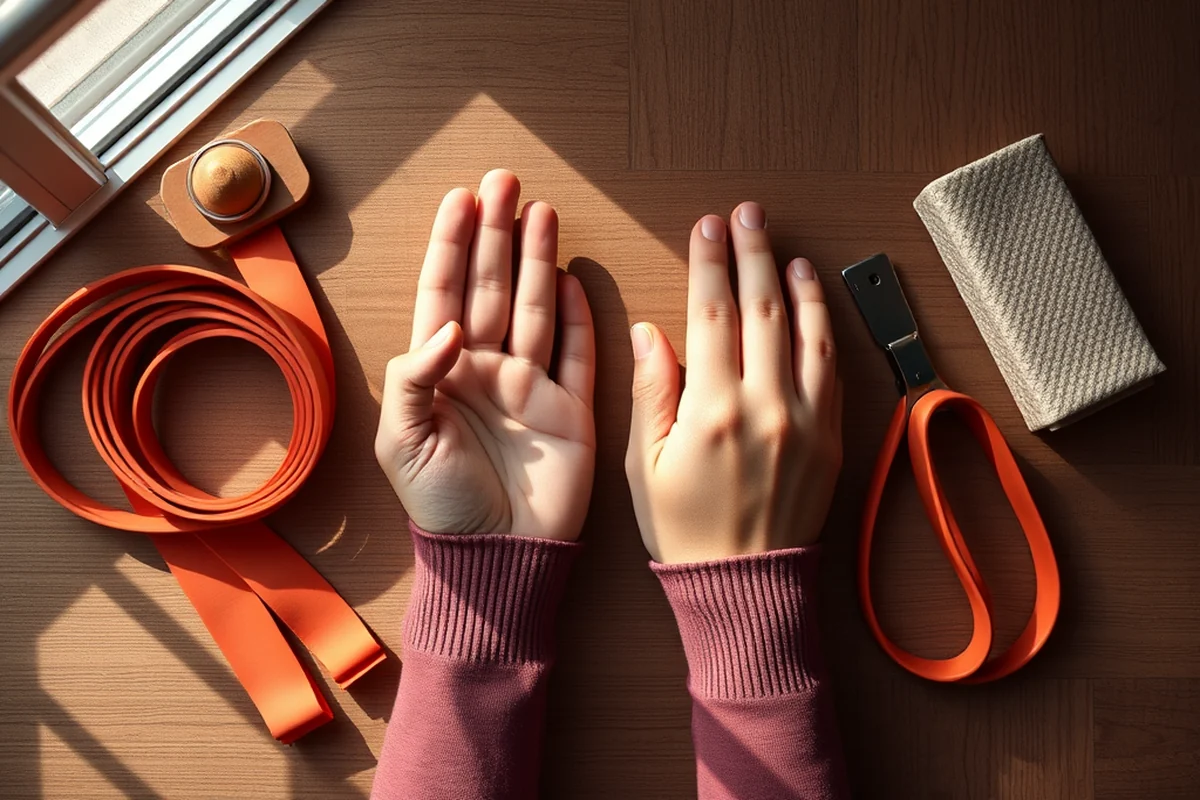
When I first bought a cheap set of bands, I didn’t realize how quickly they would wear out. Within a month, the band stretched so much that it lost all of its resistance. I had to replace them, which was an added cost I hadn’t expected.
High-quality bands, on the other hand, have lasted me several months. I’ve used them for workouts, travel, and even as a tool to help my friends and family train at home. They’re durable, consistent, and always ready to go.
The cost of quality bands may be higher upfront, but over time, they save you money by not needing to be replaced as often. I’ve calculated that over the course of a year, using high-quality bands is actually cheaper than constantly buying lower-quality ones.
Related: The best resistance band exercises
How to Clean and Maintain Your Bands
I’ve learned that cleaning your bands regularly is important. Sweat and dirt can build up over time, which can cause the rubber to degrade. I wipe mine down with a damp cloth after each use, and I occasionally use a mild soap to clean them thoroughly.
Avoiding harsh chemicals is key. I once used a strong disinfectant on my bands and noticed that they started to crack after a few weeks. It was a lesson in what not to do. The safest way to clean them is with water and a small amount of soap.
After cleaning, I make sure to air dry them completely before storing them. If they’re left damp, they can mold or stretch out of shape. I hang mine up to dry, which has kept them in good condition for months.
Related: How to workout with resistance bands
How to Store Your Bands Properly
I used to store my bands in a drawer, but after a few weeks, they were all tangled and difficult to use. I switched to hanging them on a hook, which kept them organized and easy to access. It also prevented them from stretching out when I pulled them.
Another thing I learned is that stacking them neatly is important. If they’re all balled up, they’ll start to twist and warp over time. I use a small basket to keep them organized and separate so they don’t rub against each other.
I’ve even tried using a band organizer that clips them together, and it’s worked well. It’s a small investment that keeps my bands in good shape and easy to use for any workout.
Proper storage is the unsung hero of resistance band longevity.
Related: Resistance band exercises for beginners
The Benefits of Using High-Quality Bands
I’ve noticed that using high-quality bands makes my workouts more effective. They don’t stretch or break during intense training sessions, which allows me to focus on my form and not worry about the band failing.
The comfort factor is also important. Cheaper bands tend to be rough on the skin, especially when used for a long time. High-quality bands are smoother, which makes them more comfortable during extended workouts.
Over time, I’ve also noticed that high-quality bands maintain their resistance better. They don’t lose their tension as quickly as cheaper ones, which means I can get more out of each workout without having to constantly replace my bands.
🏋️ Beginner
Perfect for first-time users, these bands offer light resistance and are ideal for learning proper form and building foundational strength.
💰 Budget
Affordable yet durable, these bands are a great option for those who want quality without spending too much.
⚡ Fastest
Designed for quick setup and use, these bands are ideal for people with busy schedules who want to get a workout in fast.
🔥 Advanced
These high-resistance bands are perfect for advanced users looking to push their limits and build strength with heavy tension.
🛠️ Maintenance
These bands are made to last, with materials that resist wear and tear, making them ideal for long-term use.
| The mistake | Why it happens | The fix |
|---|---|---|
| Using a band that’s too light for your fitness level. | This leads to under-stimulating your muscles and not seeing progress. | Choose a band with a higher resistance level that still allows you to maintain proper form. |
| Stretching the band beyond its limit. | This can cause it to snap or break during use, which can be dangerous. | Always use the band within its recommended range and avoid overextending it. |
| Not cleaning the band regularly. | Sweat and dirt can build up on the band, causing it to degrade over time. | Wipe the band down with a damp cloth after each use and clean it thoroughly once a week. |
| Storing the band in a tight, closed space. | This can cause the band to twist or warp, reducing its effectiveness and lifespan. | Store the band in a loose, open space or hang it up to prevent twisting and stretching. |
Resistance Bands Best Quality
Common Questions
How do I know if a resistance band is high quality?
Can I use resistance bands best quality for all types of workouts?
How often should I replace my resistance bands?
Are there any safety concerns with using resistance bands?
References
- Nurse Delegation - for Nursing Assistants and Home Care Aides (dshs.wa.gov)
- Effect of Elastic Resistance on Exercise Intensity and User ... - PMC (pmc.ncbi.nlm.nih.gov)
- Physical Activity Guidelines for Americans, 2nd edition (health.gov)
Cite this guide
Wrist Friendly Resistance Training (2026). Resistance Bands Best Quality. https://loadmend.com/resistance-bands-best-quality/
Feel free to cite or share this guide.
Wrist-Friendly Resistance Tool Matcher
Ranks resistance equipment by wrist-friendliness.
Open it free →