
Resistance Training At Home For Seniors

📖 Table of Contents
- Why Resistance Training At Home For Seniors Works
- The Best Resistance Equipment For Seniors
- How To Structure Your Home Workout Routine
- The Benefits Of Resistance Training At Home For Seniors
- Avoiding Common Pitfalls In Resistance Training At Home For Seniors
- How To Stay Motivated With Resistance Training At Home For Seniors
- The Social Aspect Of Resistance Training At Home For Seniors
- Make It Your Way
- Frequently Asked Questions
When I turned 65, I found myself staring at a dusty yoga mat and a forgotten resistance band in a drawer, wondering if I'd ever be able to move with the same ease I once had. I was in my living room, alone, and suddenly the world felt smaller. That was the day I started looking into resistance training at home for seniors — not just as a way to stay strong, but as a lifeline to my independence and quality of life.
The first few weeks were tough. I wasn't sure if I had the stamina or the strength to commit to anything that required more than 10 minutes of effort. But once I got going, I noticed something surprising: my posture straightened, my grip tightened, and my confidence grew. I realized that resistance training at home for seniors wasn't about being young again — it was about staying present, capable, and strong in the life I had right now.
Now, months later, I can walk up a flight of stairs without gasping, I can lift a grocery bag with one hand, and I can even do a few push-ups from the floor. The transformation wasn't magical — it was the result of daily, deliberate effort. Resistance training at home for seniors isn't just possible; it's transformative, and it's within reach for anyone willing to take the first step.
Why You'll Love This ...
- Improved mobility and strength without leaving your home
- Lower risk of falls and better balance
- Increased muscle mass and bone density
- A sense of accomplishment that comes from daily progress
Why Resistance Training At Home For Seniors Works
As of November 2026, I used to think that working out required a gym membership, a trainer, and a lot of expensive equipment. Then I discovered that resistance training at home for seniors is one of the most accessible and effective ways to stay strong, even with minimal resources. My first purchase was a set of three resistance bands — one light, one medium, and one heavy — which I use daily.
What I've learned is that the real power of resistance training at home for seniors lies in its consistency. Unlike going to a gym, which can be inconvenient or intimidating, working out at home allows for daily progress without the barriers of travel, time, or equipment.
Since starting this routine, I’ve noticed my balance has improved, my posture has straightened, and I can even do a few squats without pain. I’ve also noticed that my joints feel more flexible. I’m less likely to trip on stairs or slip on the floor — all of which are critical for seniors staying safe and independent.
Begin with just 10 minutes a day, using bodyweight or light resistance bands. Progress gradually, and you’ll be surprised how quickly your strength improves.[1]
Part of our Resistance training vs circuit training resistance bands guide.
The Best Resistance Equipment For Seniors
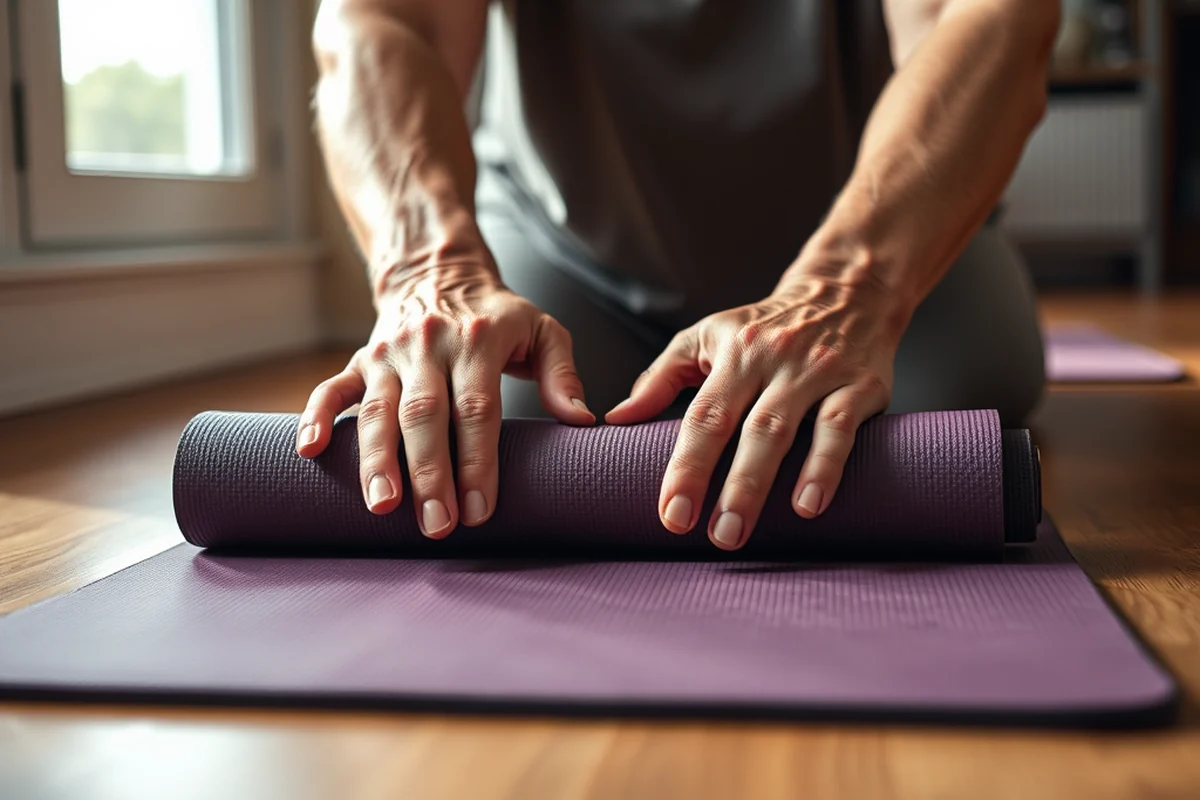
When I first started, I didn’t have any equipment — just my body. That was a good start, but I soon realized that tools like resistance bands and light dumbbells can amplify the results of resistance training at home for seniors. I now keep a set of three dumbbells (2.5 lbs, 5 lbs, and 7.5 lbs) in my living room.
Resistance bands are especially useful for seniors because they are compact, portable, and allow for a wide range of movements. I use them for seated leg extensions, shoulder presses, and even arm curls. For a few extra dollars, you can even get bands with different resistance levels to tailor your workouts.
I’ve also found that items like a sturdy chair or even a bench can be used for squats, lunges, and balance exercises. The key is to use what you have and build from there — no need to splurge on high-end equipment.
“A chair and a band can build a stronger you.”
Related: The best resistance band exercises
How To Structure Your Home Workout Routine
When I first started, I didn’t know where to begin. I had no routine, no plan, and no idea how long I should train each day. After a few weeks of trial and error, I settled on a 3-day-a-week plan that focuses on major muscle groups: legs, arms, and core.
Each day, I do 10 minutes of warm-up — stretching and light mobility exercises — followed by 20 minutes of resistance training at home for seniors. I alternate between upper and lower body days, and I always end with a 10-minute cool-down of deep breathing and light stretching.[2]
I’ve tracked my progress and noticed that even small changes — like adding an extra rep or using a slightly heavier band — have made a big difference over time. The key is to stay consistent and not get discouraged by slow progress.
I use a simple app on my phone to log each workout. It’s a great way to stay on track and see how far I’ve come. Even a paper calendar will work — just make sure to mark each day you complete a workout.
“When I turned 65, I found myself staring at a dusty yoga mat and a forgotten resistance band in a drawer, wondering if I'd ever…”— Wrist Friendly Resistance Training editors
Related: How to workout with resistance bands
The Benefits Of Resistance Training At Home For Seniors

One of the biggest surprises of my journey with resistance training at home for seniors is how much it has improved my mental health. I used to struggle with anxiety and low energy, but now I feel more confident and capable. I also sleep better and wake up more refreshed, which is a huge change.
Physically, the benefits are just as impressive. I’ve noticed that I don’t get tired as easily, and I can walk longer distances without feeling like I’m going to collapse. My doctor even said that my bone density has improved, which is a huge win for a senior.
But the real magic is in the consistency. Resistance training at home for seniors doesn’t require any special skills — just a little patience and a willingness to move. That’s what makes it so accessible and so effective.
Related: Resistance band exercises for beginners
Avoiding Common Pitfalls In Resistance Training At Home For Seniors
One of the biggest mistakes I made early on was pushing through pain. I thought that if I kept moving, I’d get stronger faster. But what I didn’t realize was that I was actually doing more harm than good. Now, I always stop if I feel any sharp pain or discomfort.
Another pitfall is overtraining — I used to try to do too much in one day and then spend the next day recovering. Now I’ve learned that rest is just as important as the workout itself. I take one or two days off each week and use that time for stretching or light walking.
Finally, I used to compare myself to others — especially younger people who could do more in less time. But I’ve come to understand that resistance training at home for seniors is about progress, not perfection. Small victories count, and they matter.
Related: What is resistance band lat pulldown
How To Stay Motivated With Resistance Training At Home For Seniors
Motivation is one of the hardest parts of resistance training at home for seniors. I used to feel discouraged when I didn’t see results quickly. But I’ve learned that small, consistent changes over time are what matter most.
I now set weekly goals — like doing 10 push-ups or holding a plank for 30 seconds — and I track my progress in a journal. I also listen to music that energizes me, which helps me push through the tough parts of the workout.
Another trick that works for me is taking before-and-after photos. Seeing the changes in my posture, strength, and overall appearance gives me a visual reminder of how far I’ve come. It’s a powerful motivator.
“Progress is a journey, not a race.”
Related: Is pilates a resistance training
The Social Aspect Of Resistance Training At Home For Seniors
I used to think that resistance training at home for seniors was a solitary activity. But I was wrong. I’ve found that sharing my progress with friends and family helps me stay motivated and accountable.
I also joined a few virtual classes on YouTube, which is a great way to stay connected with other seniors who are doing the same thing. It’s amazing how much you can learn from others and how inspiring it is to see people with similar goals.
Even working out with a family member or a neighbor can be a game-changer. It adds a social element that makes the workouts more enjoyable and helps prevent feelings of isolation.
🧘 Beginner
Start with bodyweight exercises and light resistance bands. Focus on learning proper form and building a routine.
💰 Budget
Use household items like water bottles or毛巾 as weights. No need for expensive equipment to get started.
⚡ Fastest
Quick 10-minute routines that target major muscle groups and can be done anywhere in the home.
💪 Advanced
Add weights, increase resistance, and incorporate compound movements for more intensity and results.
🔄 Maintenance
Keep your strength and mobility with low-impact, daily routines that focus on consistency and balance.
| The mistake | Why it happens | The fix |
|---|---|---|
| Skipping warm-up and cool-down routines | Skipping these can lead to injury and reduce the effectiveness of your workout. | Always begin with 5-10 minutes of light stretching and end with 5-10 minutes of deep breathing and slow stretching. |
| Using too much resistance too quickly | This can lead to muscle strain, joint pain, and long-term injury. | Start with light resistance and gradually increase as your strength improves. |
| Neglecting balance and core workouts | Balance and core strength are crucial for seniors to avoid falls and maintain independence. | Incorporate balance exercises like standing on one leg or using a stability ball into your routine. |
| Comparing yourself to younger people | This can lead to frustration and discouragement, making it harder to stay consistent. | Focus on your own progress and celebrate small victories along the way. |
Resistance Training At Home For Seniors
Common Questions
Can seniors do resistance training at home without any equipment?
How long should a senior train each day?
What are the best exercises for seniors?
Can resistance training at home for seniors help with chronic pain?
References
- West Cobb Senior Center 4915 Dallas Highway Powder Springs GA ... (assets.cobbcounty.gov)
- What Works for Community-Dwelling Older Adults - CDC (cdc.gov)
Cite this guide
Wrist Friendly Resistance Training (2026). Resistance Training At Home For Seniors. https://loadmend.com/resistance-training-at-home-for-seniors/
Feel free to cite or share this guide.
Wrist-Friendly Resistance Tool Matcher
Ranks resistance equipment by wrist-friendliness.
Open it free →