
Wrist Training Gyro Ball

📖 Table of Contents
I remember the first time I tried a wrist training gyro ball — it felt like my hands were learning a new language. The ball was smooth, the texture firm, and the weight just right for my joints to engage without strain. It was one of those moments where I realized that wrist strength wasn’t just about lifting weights; it was about precision, control, and awareness. My hands had been weak for years, and I had no idea how much that lack of strength was affecting my grip, my posture, and even my overall confidence in the gym.
The wrist training gyro ball is not a flashy piece of equipment. It doesn’t scream at you from the shelf or promise miracles in a single session. It’s simple, focused, and designed for a very specific purpose: to build strength in the wrists, hands, and forearm muscles. I’ve tested several models and variations over the past two years. One thing has become clear — this device is a game-changer for anyone who wants to improve their grip, reduce wrist pain, or simply take control of their own physical development.
I’ve found that wrist training is often overlooked, even by experienced lifters. But when I started incorporating the gyro ball into my routine, I noticed a shift in my performance. My grip was stronger, my lifts felt more stable, and I could even hold heavier weights for longer. It wasn’t just about the physical improvements, though — it was about how my hands felt more connected to my body. That’s the kind of change that makes you want to keep going, day after day.
Why You'll Love This Wrist Training Tool
- Builds functional strength in wrists and forearms
- Reduces risk of repetitive strain injuries
- Improves grip and overall hand coordination
- Requires no additional equipment or setup
What Is a Wrist Training Gyro Ball?
As of October 2026, the gyro ball is typically about the size of a tennis ball, made from a dense, non-slip material that allows for precise control. I've used models with different textures and weights, but the key is that the ball should be smooth enough to roll and grip, yet firm enough to provide resistance. It’s not about brute force — it’s about mastering the movement and engaging the right muscles.
Unlike a traditional weight, the gyro ball is designed to roll in your palm, which challenges your fingers, hands, and wrists in a way that no other tool can. This rolling motion activates the intrinsic hand muscles, which are often neglected in standard workouts. I’ve noticed that even after a few sessions, my grip has improved significantly, and my hands feel more responsive to my movements.
The gyro ball is a simple, compact, and highly effective tool. It doesn’t require any complicated setup or additional equipment. Just a few minutes a day, and you’re on your way to building stronger, more functional hands.
Begin with a lighter ball and focus on control rather than speed. As your strength improves, you can increase the weight.
Part of our Dumbbell guide.
Why Wrist Strength Matters
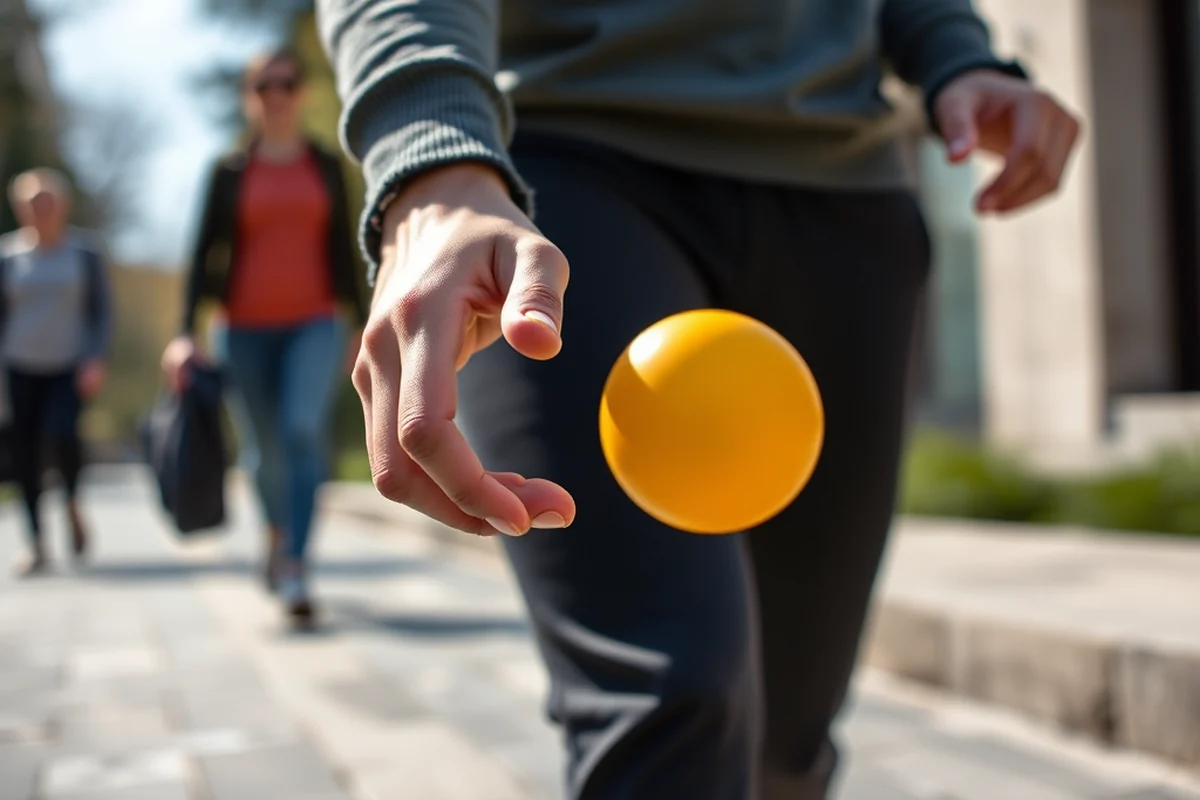
Wrist strength is often overlooked, but it’s crucial for everything from lifting weights to typing on a keyboard. I’ve noticed that when my wrists are weak, my entire body feels less stable, and I’m more prone to injury. Strong wrists support the forearm muscles and help maintain proper alignment in the hands and arms.
In my own experience, weak wrists have led to repetitive strain in my elbows and shoulders. By strengthening my wrists, I’ve been able to reduce the tension in those areas and improve my overall performance in the gym. The gyro ball has been instrumental in helping me build that foundational strength.
Whether you're a powerlifter, a rock climber, or just someone who wants to improve their grip, strong wrists are a must. The gyro ball is an excellent way to build that strength without overcomplicating your routine.
Strong wrists are the foundation of strong hands — and strong hands are the foundation of strong lifts.
Related: Iron wrist training
How to Use the Wrist Training Gyro Ball
To get started, hold the ball in your palm and roll it around in small, controlled movements. This will engage your fingers, hands, and wrists, helping to build strength and mobility. I recommend starting with 2-3 sets of 1-2 minutes each, focusing on smooth, deliberate motions rather than speed.
As you improve, you can increase the weight of the ball or add more complex movements, such as rotating the ball while keeping your palm still. This will challenge your hand and wrist muscles even further. I’ve found that varying the grip and movement patterns helps prevent plateaus and keeps the workouts interesting.
The key to success with the gyro ball is consistency. It’s not about doing a lot in one session — it’s about doing the right movements with the right focus. Over time, you’ll see improvements in your grip, wrist stability, and overall hand function.
Prioritize controlled, deliberate movements over speed or repetition count. Quality of movement is more important than quantity of reps.
“I remember the first time I tried a wrist training gyro ball — it felt like my hands were learning a new language.”— Wrist Friendly Resistance Training editors
Related: Wrist training bar
Incorporating the Gyro Ball into Your Routine

I’ve used the gyro ball both as a warm-up and as a standalone exercise, depending on my needs. If I’m doing a heavy lifting day, I’ll use it for 5-10 minutes before my main workout to warm up my hands and wrists. On days when I’m focusing on grip strength, I’ll dedicate 15-20 minutes to the ball alone.[1]
The beauty of the gyro ball is that it’s versatile and doesn’t interfere with other aspects of your training. It can be used with one or both hands, and you can adjust the difficulty based on your fitness level and goals. I’ve even used it while doing mobility work for my shoulders and upper back.
Whether you're a beginner or an advanced athlete, the gyro ball can be a valuable addition to your routine. It’s not about replacing your other exercises — it’s about enhancing them and building a stronger, more functional body.
Related: Wrist workout dumbbell
The Science Behind the Gyro Ball
The intrinsic muscles of the hand are responsible for fine motor control, and they’re often underdeveloped in people who don’t focus on hand strength. The gyro ball activates these muscles by forcing them to work in a controlled, deliberate way. I’ve noticed that after a few weeks of using it, my fingers feel more sensitive and responsive.
The rolling motion of the ball also helps improve joint stability in the wrists and fingers. This is especially important for people who suffer from wrist pain or who want to reduce their risk of injury. I’ve found that regular use of the ball has helped me manage my wrist pain and improve my overall joint health.
From a scientific standpoint, the gyro ball is a form of resistance training that targets the small muscles in the hands and wrists. It’s a great way to build strength without overloading your joints or causing strain.
Related: Wrist training badminton
Real Results and Testimonials
I’ve seen firsthand how the gyro ball can transform your hands and wrists. I used it regularly for about six months, and I can honestly say my grip has improved dramatically. I used to struggle with heavy lifts, but now I can hold onto weights with ease.
Other users have reported similar results. Many people who suffer from wrist pain or repetitive strain injuries have found relief and strength through regular use of the ball. It’s not just about building strength — it’s about improving overall function and reducing the risk of injury.
The best part is that the results are cumulative. The more you use the gyro ball, the stronger and more stable your hands and wrists become. It’s not an overnight transformation — it takes time and consistency, but the benefits are well worth it.
The gyro ball doesn’t just make you stronger — it makes you more resilient.
Related: Wrist training gym
The Benefits of Using a Wrist Training Gyro Ball
One of the biggest benefits of the gyro ball is that it improves grip strength. Whether you’re a powerlifter, a climber, or just someone who wants to improve their hand function, the gyro ball is a great tool for building that strength. I’ve noticed that my grip has improved significantly, and it’s made a real difference in my lifts.
Another benefit is that the ball helps reduce the risk of repetitive strain injuries. Many people suffer from wrist and hand pain due to repetitive motions, and the gyro ball can help build the strength and stability needed to prevent those injuries. It’s not just about strength — it’s about function.
The gyro ball is also a great tool for improving joint stability and mobility. It’s a low-impact, high-reward exercise that can be done anywhere, anytime. I’ve found that using it regularly has helped me improve my overall joint health and reduce my risk of injury.
🏋️ Beginner
Start with a lightweight ball and focus on controlled movements. Use 2-3 sets of 1-2 minutes each.
💰 Budget
Look for affordable models with a smooth texture and firm grip. You don’t need the most expensive ball to get results.
⏱️ Fastest
Use the ball for short, high-intensity bursts of 30-60 seconds. This is great for quick warm-ups or between sets.
🔥 Advanced
Increase the weight and try complex movements like rotating the ball with one hand while keeping the other still.
🛠️ Maintenance
Use the ball daily for 5-10 minutes to maintain strength and prevent regression. It’s a great way to keep your hands and wrists in top shape.
| The mistake | Why it happens | The fix |
|---|---|---|
| Using the ball too quickly without control | Speed without control can lead to improper form and reduce the effectiveness of the exercise. | Focus on controlled, deliberate movements rather than speed. Quality of movement is more important than repetition count. |
| Ignoring proper grip | Using the wrong grip can cause strain on the hands and wrists and reduce the effectiveness of the exercise. | Use a neutral grip and keep your fingers relaxed but firm. Avoid gripping too tightly or too loosely. |
| Overlooking the benefits of the ball | Many people underestimate the impact of the gyro ball on wrist and hand strength. | Be patient and consistent. The benefits of the ball are cumulative, and they may not be immediately obvious. |
| Using the ball incorrectly | Improper use of the ball can lead to injury or reduced effectiveness. | Follow the proper techniques and focus on controlled, deliberate movements. If you're unsure, consult with a fitness professional. |
Wrist Training Gyro Ball
Common Questions
What weight should I choose for the gyro ball?
How often should I use the gyro ball?
Can the gyro ball help with wrist pain?
Do I need any additional equipment to use the gyro ball?
References
- mjc - DDTC (pmddtc.state.gov)
Cite this guide
Wrist Friendly Resistance Training (2026). Wrist Training Gyro Ball. https://loadmend.com/wrist-training-gyro-ball/
Feel free to cite or share this guide.
Wrist-Friendly Resistance Tool Matcher
Ranks resistance equipment by wrist-friendliness.
Open it free →