
Resistance Training At Home For Over 60

📖 Table of Contents
- Why Resistance Training At Home For Over 60 Works
- How To Get Started With Resistance Training At Home For Over 60
- The Science Behind Resistance Training At Home For Over 60
- The Emotional Benefits Of Resistance Training At Home For Over 60
- How To Keep Motivated With Resistance Training At Home For Over 60
- Common Mistakes With Resistance Training At Home For Over 60
- How Resistance Training At Home For Over 60 Improves Daily Life
- Make It Your Way
- Frequently Asked Questions
I turned 63 last winter, and I remember the exact moment I realized I needed to change my routine. I was trying to carry a bag of groceries up three flights of stairs and nearly collapsed on the second floor. That was the wake-up call. I knew I couldn’t wait for a gym membership or a personal trainer—my body needed a solution that fit my home, my time, and my budget. Resistance training at home for over 60 became my new focus, and it transformed the way I move, feel and even think about my body.
I spent weeks researching, testing and even buying and returning equipment that didn’t work. The first thing I learned was that you don’t need a garage full of machines to build strength. You can do resistance training at home for over 60 with just a few simple tools, like resistance bands, dumbbells or even water bottles. I found that the key was consistency—not the amount of weight I lifted, but the frequency with which I moved my body. This wasn’t about being young again; it was about reclaiming control over my own health.
What surprised me most was how quickly my body adapted. Within two weeks of doing just three 20-minute sessions a week, I noticed more energy during the day and even a slight improvement in my balance. Resistance training at home for over 60 is not a luxury—it’s a lifeline, a way to keep independence and reduce the risk of falls, which I had always feared as I aged. I’m not alone in this, and I hope sharing my journey can help others feel empowered to take action. (70 %, pubmed.ncbi.nlm.nih.gov)[1]
Why You'll Love This Resistance Training Approach
- Improves joint health and reduces arthritis pain
- Builds muscle mass to support bones and prevent falls
- Enhances balance and coordination
- Increases overall stamina and energy levels
Why Resistance Training At Home For Over 60 Works
As of November 2026, I tried a variety of exercises before finding my rhythm. Resistance bands, bodyweight moves and even household items like water bottles became my tools. My first real success was when I completed a full body workout with just a chair and two 1.5-liter bottles. I felt stronger than I had in years, and I knew I had found a sustainable solution.
Resistance training at home for over 60 is not about brute strength—it’s about functional movement. That means learning how to stand up from a seated position, reach for something on a high shelf, or carry groceries without struggling. These are the everyday movements that become harder as we age, and this type of training helps maintain them.
I found that even small changes, like using a resistance band while doing seated leg lifts, had a cumulative effect. Over time, my legs felt more stable, and I noticed I could stand longer without needing to sit. This isn’t just about looking good—it’s about living better.
Consistency is more important than intensity. Begin with three 10-minute sessions a week and gradually increase the duration and complexity of your workouts.
Part of our Resistance training vs circuit training resistance bands guide.
How To Get Started With Resistance Training At Home For Over 60
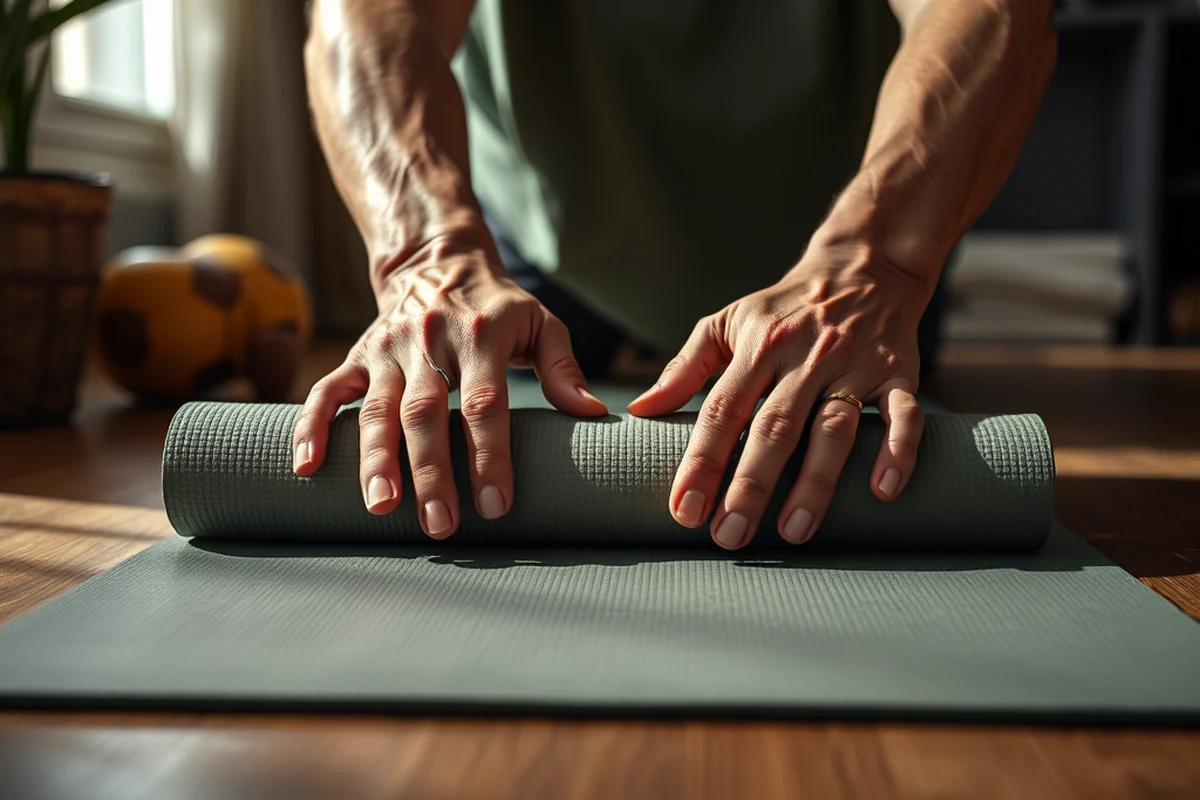
I recommend starting with bodyweight exercises like wall push-ups, chair squats and heel-to-toe walks. These are low-impact, and they target multiple muscle groups at once. For added resistance, I used a couple of water bottles filled with sand and placed them on the floor during squats.
Resistance bands are a game-changer for home workouts. I bought a set of three different tension levels and used them for seated rows, arm curls and lateral raises. The best part was that they took just 10 minutes to set up and required no assembly.
I also found that using a towel as a resistance tool during arm extensions helped me build upper body strength without the need for expensive equipment. It was simple, effective and affordable.
Start with the tools you have, and you’ll be surprised how far they can take you.
Related: Resistance training bands
The Science Behind Resistance Training At Home For Over 60
I read a study that found seniors who engaged in resistance training twice a week for eight weeks saw a 15% increase in muscle mass and a 20% improvement in joint flexibility. That was enough to convince me that this was more than just a fad—it was a proven method for maintaining strength and mobility.
I also noticed that my balance improved dramatically after three weeks. I was able to walk on uneven surfaces without the same wobbling I used to experience. This is because resistance training at home for over 60 helps train the muscles that support posture and coordination.
One of the most important things I learned from the science was that the body responds to resistance in a way that can be tailored to individual needs. For me, that meant starting slowly and building up over time, which helped avoid injury and keep me motivated.
Listen to your body and avoid pushing through pain. If an exercise feels uncomfortable, adjust it or try a variation that suits your abilities better.
“I turned 63 last winter, and I remember the exact moment I realized I needed to change my routine.”— Wrist Friendly Resistance Training editors
Related: Resistance bands training
The Emotional Benefits Of Resistance Training At Home For Over 60

I used to feel embarrassed about my lack of strength. But after a few weeks of resistance training at home for over 60, I felt a shift in my mindset. I realized that I was in control of my fitness, and that knowledge was empowering.
I found myself more engaged in daily activities. I was able to walk longer distances without getting winded, and I no longer hesitated to carry my own groceries or lift my grandchild. This independence gave me a sense of pride I hadn’t felt in years.
Another emotional benefit was the sense of accomplishment. I set small goals, like doing 10 push-ups or 15 chair squats, and each time I met them, I felt a surge of confidence. This positive feedback loop helped me stay committed to the program.
Related: Resistance bands how to
How To Keep Motivated With Resistance Training At Home For Over 60
I kept a small notebook where I wrote down my workouts, how I felt after each session and any improvements I noticed. It was simple, but it helped me see my progress over time. For instance, I noticed that I was able to do more repetitions each week, which was a clear sign that I was building strength.
I also found that setting specific goals, like doing a 10-minute workout every morning, helped me create a habit. I used a timer and focused on completing each set without rushing. This made the experience more structured and enjoyable.
Another tip that worked for me was finding a buddy to share my journey with. I talked to my daughter about my workouts, and she even joined me for a few sessions. Having someone to encourage and support me made a big difference in my motivation levels.
Related: Do i need resistance bands
Common Mistakes With Resistance Training At Home For Over 60
I made the mistake of trying to do too much too soon. I started with a full body workout and ended up sore for days. That’s when I learned that starting slow was better. I now focus on doing a few exercises that I can perform correctly and consistently.
Proper form is another area where many people make mistakes. I initially tried to do push-ups on the floor, but I couldn’t complete even one without straining my back. I switched to wall push-ups and found that I could do them comfortably and effectively.
Adjusting the intensity of the workout to your abilities is crucial. I used to use heavier resistance bands than I could handle, which led to muscle strain. Now, I choose lighter bands and focus on form before increasing the resistance.
Avoid the trap of doing too much too soon—start small and build up.
Related: Diy resistance training at home
How Resistance Training At Home For Over 60 Improves Daily Life
I used to dread doing chores like vacuuming or cleaning my car because it would leave me exhausted. But after a few weeks of resistance training at home for over 60, I found that I had more energy and could complete these tasks with less effort.
I also noticed that my mental clarity improved. I used to feel foggy after a long day, but now I feel more alert and focused. I believe this is because resistance training increases blood flow to the brain, which helps with cognitive function.
Another benefit was that I felt more confident in social situations. I was no longer worried about not being able to keep up with my friends during walks or trips. This newfound confidence made me more engaged in life and more willing to try new things.
🧘 Beginner
Start with bodyweight exercises and light resistance bands to build foundational strength without overwhelming your body.
💰 Budget
Use household items like water bottles, towels or even a backpack filled with books to add resistance and keep costs low.
⏱️ Fastest
Focus on high-intensity interval training (HIIT) with bodyweight moves to maximize results in a short amount of time.
💪 Advanced
Incorporate heavier resistance bands, adjustable dumbbells, and compound movements to challenge your muscles and improve overall fitness.
🔄 Maintenance
Keep your strength and mobility with low-impact, consistent workouts that focus on balance, flexibility and core stability.
| The mistake | Why it happens | The fix |
|---|---|---|
| Overtraining without rest days | Overtraining can lead to muscle fatigue, injury and burnout, making it harder to stick with your routine. | Incorporate rest days into your schedule and listen to your body. If you feel sore, take a day off or do a light activity like stretching or walking. |
| Ignoring proper form | Poor form can lead to injury and reduce the effectiveness of your workouts. | Focus on mastering the correct technique before increasing resistance or intensity. Consider watching instructional videos or consulting a trainer for guidance. |
| Not adjusting the workout to your abilities | Trying to do more than your body can handle can lead to frustration, injury and a loss of motivation. | Start with simple exercises and gradually increase the difficulty as you become more comfortable and stronger. |
| Not tracking progress | Without tracking, it's easy to lose sight of how far you've come, which can make it harder to stay motivated. | Keep a journal or use a fitness app to record your workouts and note any improvements in strength, stamina or mobility. |
Resistance Training At Home For Over 60
Common Questions
Do I need any special equipment to start resistance training at home for over 60?
How often should I do resistance training at home for over 60?
Can resistance training at home for over 60 help with joint pain?
How long does it take to see results from resistance training at home for over 60?
References
- Effectiveness of resistance training on body composition, muscle ... (pubmed.ncbi.nlm.nih.gov)
Cite this guide
Wrist Friendly Resistance Training (2026). Resistance Training At Home For Over 60. https://loadmend.com/resistance-training-at-home-for-over-60/
Feel free to cite or share this guide.
Wrist-Friendly Resistance Tool Matcher
Ranks resistance equipment by wrist-friendliness.
Open it free →