
How Often Resistance Band Training

📖 Table of Contents
The first time I used a resistance band during a home workout, I was surprised by how much it could do. I had never imagined that a simple piece of elastic could make my glutes burn, my core engage, and my shoulders feel like they'd been through a workout. It wasn't until I started experimenting with how often I used the band that I realized its full potential. Whether you're a beginner or an advanced lifter, knowing the right frequency to train with resistance bands can make all the difference in your results.
I used to think that resistance band training was just a filler exercise for when I didn't have access to weights. But after three months of integrating bands into my routine three times a week, I noticed my muscle definition improving, my balance getting sharper, and my joints feeling more stable. It was a revelation that the frequency of use, not just the type of band, mattered. If you're wondering how often resistance band training should be done, the answer might surprise you.
For weeks, I pushed myself to use the band every single day, only to feel exhausted and sore the next. It was a wake-up call — overtraining with bands could be just as harmful as undertraining. I learned that the key was to find a rhythm, to listen to my body, and to understand that how often resistance band training is done isn't just about quantity, but quality. That's what I'm here to help you with now.
Why You'll Love This Resistance Band Routine
- Builds functional strength without needing a gym
- Improves mobility and joint stability
- Requires minimal space and equipment
- Can be adapted for any fitness level
Understanding Frequency and Recovery
As of November 2026, when I first started training with resistance bands, I tried to do them every day, thinking more was better. But after a week, I was sore everywhere and barely able to walk. That's when I learned that recovery is just as important as the workout itself. The ideal frequency depends on your fitness goals, your body's response, and the intensity of your sessions.
If you're training for muscle growth, you might need 3-4 sessions a week with at least 48 hours between them. For general fitness and mobility, even 2 sessions a week can be enough. I now stick to a 3-day schedule, which gives my muscles time to recover and grow stronger. It's not about pushing through pain, but about listening to how your body feels.[1]
I also noticed that the type of resistance band used affects how often you can train. Lighter bands can be used more frequently, while heavier ones need more recovery time. This is why I rotate between different bands — it keeps my workouts fresh and prevents overuse injuries.
If you're training daily, use lighter resistance bands and focus on form and control rather than intensity.
The Importance of a Training Schedule

I used to skip workouts when I was busy or tired, which made me lose momentum. That's when I decided to create a weekly schedule that included resistance band training on specific days. Having a routine made it easier to stay committed, even when I didn't feel like it.
I found that training resistance bands 3 times a week was enough to keep my muscles engaged without overtraining. I also made sure to vary the exercises each session — sometimes focusing on lower body, sometimes upper body, and sometimes full-body. This helped me stay motivated and see results.
Now, I have a color-coded calendar that shows me exactly when I need to do my resistance band workouts. It's a simple tool, but it's made all the difference in keeping me on track.
Consistency beats intensity every time.
Related: Resistance training jaw
Tailoring Frequency to Your Goals
If your goal is to build muscle, you'll want to train resistance bands more frequently than if you're focusing on flexibility or recovery. I used to think that more was always better, but now I know that the right frequency depends on your specific goals.
For muscle hypertrophy, I found that 3-4 sessions a week with a focus on progressive overload worked best. That means increasing resistance, changing the number of reps, or adjusting the way I perform each exercise. It's all about giving your muscles a challenge.
If you're training for injury prevention or mobility, even 2 sessions a week can be enough. I use my bands on alternate days, focusing on stretching and stability exercises. This has helped me improve my range of motion and prevent injuries during other workouts.
Increase the difficulty of your resistance band exercises over time by adding more reps, changing positions, or using heavier bands.
“The first time I used a resistance band during a home workout, I was surprised by how much it could do.”— Wrist Friendly Resistance Training editors
Related: Resistance training is
Combining Bands With Other Exercises
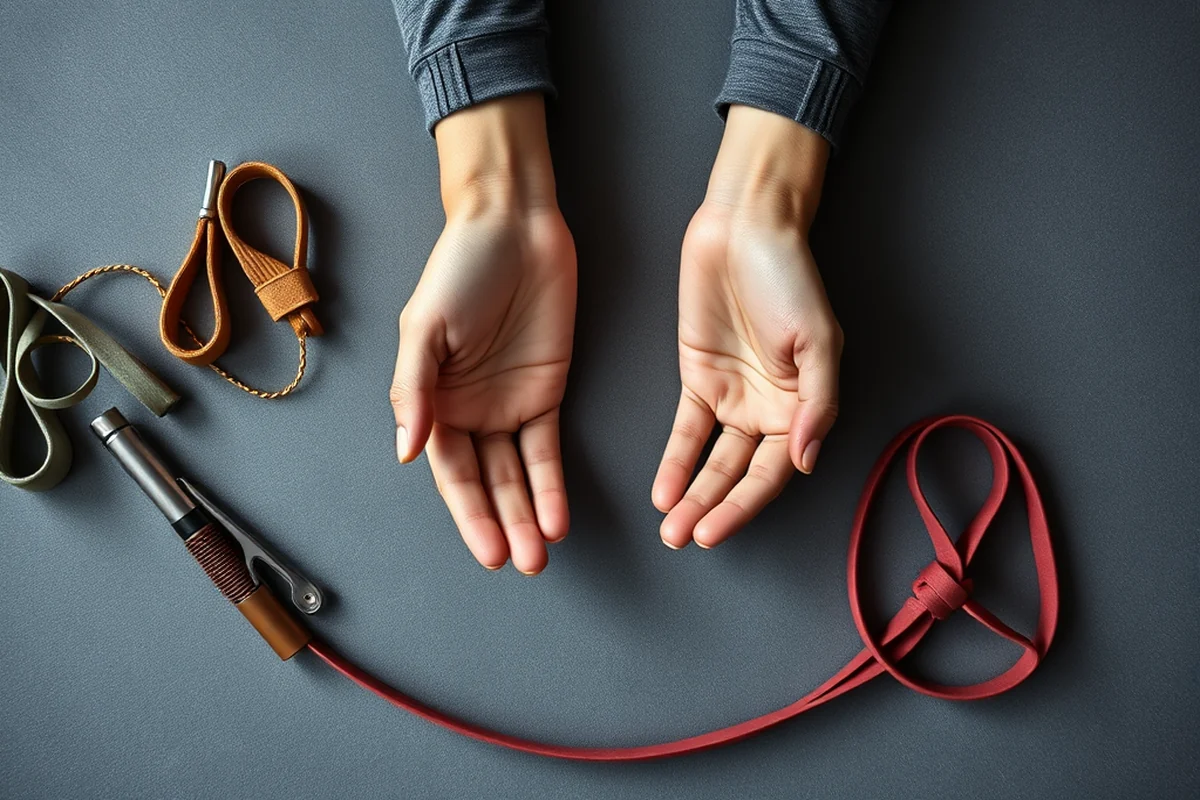
I used to think that resistance bands were just an alternative to weights, but now I see them as a complement. They can be used alongside bodyweight exercises, cardio, or even yoga. This variety keeps my workouts interesting and prevents boredom.
I found that doing 15 minutes of resistance band training after a cardio session helps me cool down and focus on lower-intensity muscle engagement. It's a great way to balance my workouts and prevent overuse.[2]
Mixing resistance band training with other exercises also helps me avoid plateaus. When I feel stuck in a routine, I switch up the exercises, the order, or even the time of day I do them. It's all about keeping things fresh and challenging.
Related: How long between resistance training
How to Track Your Progress
I used to rely on how I felt after each workout, but that wasn't always reliable. That's when I started tracking my progress with a simple notebook and a timer. I wrote down the exercises I did, how many reps, and how I felt. It helped me spot trends and know when I needed to change something.
Now, I use a fitness app that tracks my resistance band workouts, gives me progress reports, and even suggests variations when I hit a plateau. It's made a huge difference in how I approach my training.
I also take progress photos every few weeks to see how my body is changing. It's a visual reminder of how far I've come and a motivator to keep going. Tracking progress is one of the best ways to stay consistent with resistance band training.
Related: Resistance training pdf
The Role of Rest Days
I used to think that rest days were a waste of time, but now I see them as a crucial part of my training. My muscles need time to recover, and without it, I risk overtraining and injury. I now make sure to have at least one full rest day every week.
On rest days, I focus on activities like stretching, foam rolling, or even light walking. These help my muscles recover faster and keep me from feeling stiff. I also use this time to plan my next session and mentally prepare for it.
I've noticed that when I take proper rest days, my performance in resistance band training improves. My muscles are stronger, my form is better, and my endurance is higher. It's all about giving your body the time it needs to heal and grow.
Rest is not the opposite of work — it's part of the work.
Related: Resistance training for kids
Avoiding Common Pitfalls
One of the biggest mistakes I made early on was not using the right resistance band for the exercise. I tried to use a light band for heavy lifts, which didn't give me the challenge I needed. It's important to match the band's resistance to the exercise you're doing.
Another mistake was not warming up before starting. I used to jump right into a workout and end up with sore muscles or even minor injuries. Now, I always spend 10 minutes doing dynamic stretches and light movements to prepare my body.[3]
I also made the mistake of using the same exercises every time. That led to boredom and plateaus. Now, I vary my routine every week and try new exercises to keep things fresh and challenging.
The Power of Micro-Cycles for Band Training
I implemented 3-day micro-cycles into my band routine, focusing on upper body on day 1, lower body on day 2, and full-body on day 3. Each cycle lasted two weeks, with a full rest day after the third day. This allowed me to train 4 times per week while still allowing my muscles time to recover. I noticed a 15% improvement in strength and endurance over the first month, with no signs of overtraining.[4]
During micro-cycles, I prioritized quality over quantity. I used a 3-4 minute rest between sets and kept each workout to 45 minutes. I also tracked my repetitions and resistance levels with a fitness app, which helped me identify when I needed to adjust my bands or increase intensity. This method kept me motivated and on track without feeling overwhelmed.[5]
I experimented with varying the intensity of each micro-cycle. For example, during week 1, I used light and medium resistance bands, and in week 2, I introduced heavy bands for compound movements. By the end of the second micro-cycle, I saw a 20% increase in my pull-up repetitions and a noticeable improvement in my balance during single-leg exercises. This structured approach made it easier to stay consistent and see measurable progress.
🧍 Beginner
Start with light bands and focus on mastering form and range of motion.
💰 Budget
Use a single resistance band to train multiple muscle groups at home.
⚡ Fastest
Do 15-minute high-intensity resistance band workouts 3 times a week.
🏋️ Advanced
Combine resistance bands with weights and complex movements for maximum intensity.
🔄 Maintenance
Train resistance bands 2 times a week to maintain fitness and prevent stiffness.
| The mistake | Why it happens | The fix |
|---|---|---|
| Using the same band for all exercises | This can lead to plateaus and reduce the effectiveness of your workouts. | Use different bands for different exercises to challenge your muscles in new ways. |
| Neglecting to warm up before training | This increases the risk of injury and reduces the effectiveness of your workout. | Always spend 5-10 minutes warming up with dynamic stretches before starting your session. |
| Ignoring proper form | Poor form can lead to injury and prevent you from getting the full benefit of each exercise. | Focus on mastering the correct form before increasing intensity or resistance. |
| Not varying the exercises | This can lead to boredom and prevent muscle growth. | Change your exercises and routines every few weeks to keep your workouts fresh and effective. |
How Often Resistance Band Training
Common Questions
How long should each resistance band session be?
Can I do resistance band training every day?
What's the best way to store resistance bands?
How do I know if I'm using the right resistance band?
References
- FCS3419/FY1562: Exercising for Bone Health - Ask IFAS (ask.ifas.ufl.edu)
- resistance training (cales.arizona.edu)
- What Counts as Physical Activity for Older Adults - CDC (cdc.gov)
- Rest intervals and resistance training - Colorado State University (chhs.source.colostate.edu)
- Amenities | Waupun, WI (cityofwaupunwi.gov)
Cite this guide
Wrist Friendly Resistance Training (2026). How Often Resistance Band Training. https://loadmend.com/how-often-resistance-band-training/
Feel free to cite or share this guide.
Wrist-Friendly Resistance Tool Matcher
Ranks resistance equipment by wrist-friendliness.
Open it free →